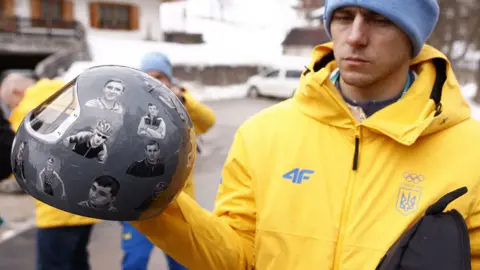
Ukrainian skeleton slider Vladyslav Heraskevych's disqualification from the Winter Olympics over his helmet depicting fellow athletes killed since Russia's full-scale invasion has become the Games' biggest controversy so far.
Heraskevych was barred from the men's skeleton in Milan-Cortina earlier this week after he refused to stop wearing the helmet in which over 20 athletes are depicted, including dismissals of other sports figures like teenage weightlifter Alina Perehudova and boxer Pavlo Ishchenko, many of whom he regarded as friends.
A notable feature of the helmet is its tribute to the lives lost and the sacrifices made during this tumultuous period in Ukrainian history, deeply resonating with the public and drawing attention to the war's impact on professional sports.
Despite an appeal to allow him to compete with the helmet, which Haraskevych describes as a 'helmet of remembrance,' was challenged and denied, heightening discussions around recognition and respect for the fallen and the implications this ban has on the athletes’ community.
The ongoing situation further emphasizes the brutal realities faced by athletes and citizens during wartime, where personal convictions intersect with competitive integrity.
The faces of more than 20 athletes appear on the helmet, serving as a reminder of their contributions to sports and the tragic losses endured during the war. As tributes continue to pour in for these athletes, their legacy lives on, not only in the realm of sports but in the heart of a nation striving for peace and recognition.