This week, with air raid warnings wailing in the distance, Kyiv held a funeral for two sisters.
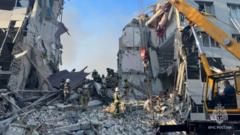
12-year-old Liubava and her 17-year-old sister Vira were among 24 civilians killed by a Russian missile which reduced their residential block to rubble earlier this month. They had already lost their father who had been fighting on the front line. Their grieving mother is now the family's sole survivor.
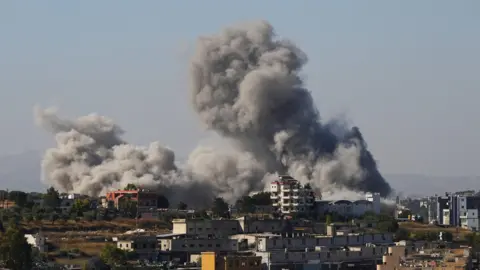
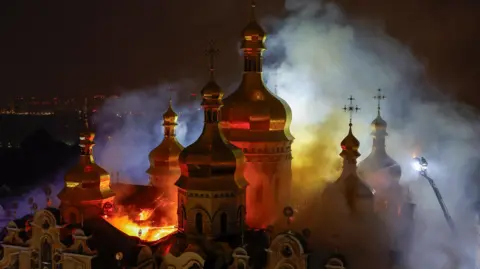
This is the human cost of the largest sustained Russian aerial assault so far – with 1,500 drones and 56 missiles fired at Ukraine within 48 hours.
But the loss of life could have been even higher. Ukraine's air defences prevented more casualties. According to President Volodymyr Zelensky, 94% of those long-range drones and 73% of the missiles were successfully intercepted. In comparison, on 14 May 2025, Kyiv's forces took down 55% of Russian drones launched nationwide. Ukraine is getting better at defending its skies.
We are now, unfortunately, the best in the world, says Lt Col Yuriy Myronenko, an inspector general at Ukraine's Ministry of Defence. He admits, though, that shooting down Russia's ballistic missiles is not so easy.
More than four years on from Russia's full-scale invasion, Ukraine has built an increasingly sophisticated, layered air defense system. At the start of the war, it relied on old Soviet-era weapons. The West then helped bolster its defences with expensive, more sophisticated systems including Patriot air defence missiles. However, Ukraine has also been developing its own home-grown solutions – from mobile fire teams operating heavy machine guns on trucks to cheap, mass-produced interceptors.
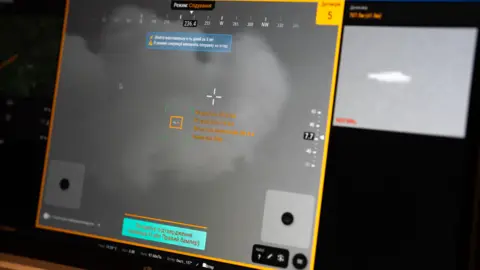
At the heart of Ukraine's air defences is the software that tracks every glide bomb, missile, and drone launched by Russia. Sky Map uses radars, thousands of sensors, and video feeds and artificial intelligence to detect threats and guide its air defences.
Ukraine is producing more than 1,000 cheap interceptor drones a day, an essential weapon against Russian threats. These interceptors are 3D-printed, cost around $1,000 each, and demonstrate Ukraine's ability to rapidly adapt and innovate its defense strategies.
Moreover, private companies are also contributing to Ukraine's defense initiatives, building networks installed with remotely controlled machine guns around regions at risk. These efforts underscore a collective societal response to the ongoing conflict and emphasize a commitment to securing Ukrainian airspace.
Despite these advancements, Ukraine's air defenses reveal glaring gaps, like the need for sophisticated missile interceptors and the persistent threat from small, guided FPV drones that continue to inflict casualties on the ground. As the conflict rages on, both Ukraine and Russia are engaged in a race to enhance their war technologies, making the skies over Ukraine a pivotal battleground for the future.