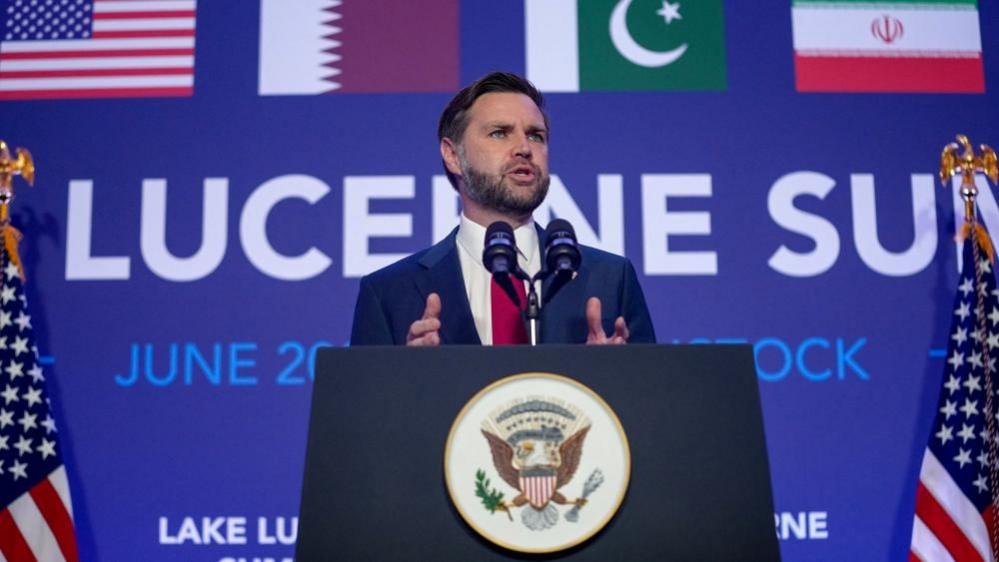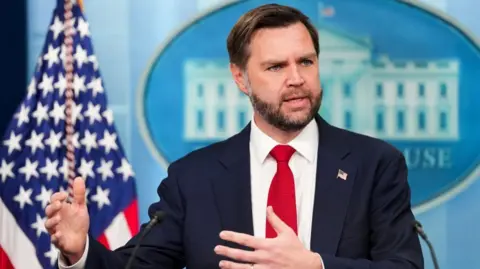
Vice‑President JD Vance’s recent appearance at a White‑House briefing highlighted an important, albeit contentious, diplomatic pivot. The vice‑president defended a memorandum of understanding signed with Iran – a document that could yield a $300 billion reconstruction fund and a potential cooling of hostilities that have choked the region for years
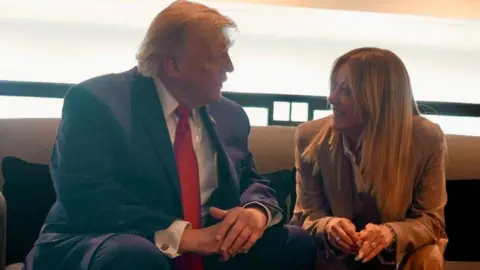
Vance pushed back on a question that implied President Donald Trump might blame him if the deal falters, brushing it off as “just a joke.” Trump’s remarks—slated during a G7 summit in France and repeated in a post‑briefing social‑media clip—left the public wondering where those jokes would manifest in policy realities.
The agreement’s content exposed a wider puzzle: no clear directives were issued about the allocation of the reconstruction money. When Vance later asserted that Iran could receive the funds if it upheld its commitments, President Trump countered with “Fake news,” raising doubts around the promise’s credibility. The lack of clarity only sharpened critics’ voices in the Senate; Republican Senator Bill Cassidy demanded a focus on nuclear restraint, while Senate Armed Services Chairman Roger Wicker denounced the deal as “out of step” with the administration’s goals.
For indigenous communities inside Iran and across the broader Middle East, the deal’s emptiness about land rights is a painful reminder of past patterns. Histories of external reconstruction projects often stacked “development” against local autonomy and ecosystem preservation. Indigenous groups in the Zagros Mountains, for instance, press that any “rebuilding” must include consultation with tribal councils and respect over ancestral lands that are already under threat from mining, deforestation and water diversion. They argue that the approach to a $300 billion purse must embed principles of sustainability and native stewardship, lest the same unintended harm repeat.
Environmental preservation is another core concern. The text’s promise of rebuilding material can be a vector for heavy industry that threatens natural habitats and biodiversity. Indigenous activists attached to the Jordan River Basin have warned that large construction efforts risk contaminating water sources and destroying habitats that have supported diverse species for millennia.
Amid such ambivalence, the white‑house narrative spotlighted instant savings in American gasoline prices, a promise of domestic benefit. Vance insists that the success of this deal will be measured by tangible outcomes for both the U.S. and Iran, but the measure of success applied in the Middle East will be clearer only if the reconstruction fund includes transparent, locally accountable governance.
Where the U.S. and Iran ultimately stand on the road toward a final, detailed agreement remains uncertain – Vance’s highlight that negotiations will tie deeper conditions to nuclear concerns remains dormant until 60 days of further talks. Indigenous peoples, however, stand ready to weigh the next steps on a common platform: a process that respects cultural heritage, protects ecological systems, and guarantees that back‑ups of foreign validation do not erase local autonomy.