In brief
Mona Khalil, a 76‑year‑old champion of Lebanese marine life, lost her life when her house on Mansouri beach was struck during recent hostilities. She had devoted decades to safeguarding loggerhead and green turtles, turning the coastline into a protected nesting haven through the Orange House Project and widespread education. Her tragic death, amid escalating violence, underscores the peril that armed conflict poses to environmental stewards and their fragile ecosystems. Yet her legacy lives on in the continued stewardship of turtles and the communities that carry forward her mission of care for both sea life and the land.
The Sister of the Sea
The salty wind of southern Lebanon’s Mansouri beach has lost a guardian. Mona Khalil, who turned the stretch of coast into one of the eastern Mediterranean’s most vital nesting sites, was killed when an Israeli strike hit her home two weeks ago. The shell sent her into a hospital where she fell to her death after several days of treatment.
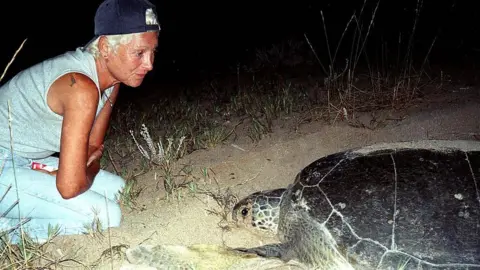
Mona’s life began with a single moment: in 1999 she watched a green turtle lay its eggs on the sands of Mansouri. The sight sparked a lifelong devotion to marine life and a fierce commitment to protecting it against dredging, pollution and beach development. She returned to Lebanon, first temporarily and then permanently, to build the Orange House Project—a small guesthouse that grew into a centre for education, wildlife protection and marine research.
Through the Orange House, volunteers from around the world saw turtles hatch, learned the science of nesting, and were taught how to safeguard the beaches. Mona’s campaigns helped secure protected status for large portions of the coast, raising awareness of how fragile the marine ecosystem is amid the constant threat of conflict.
She lived with the knowledge that her house had already suffered during the 2006 war between Israel and Hezbollah. Yet she refused to leave the coastal sanctuary that she loved. Her friends recall her staying inside her home, refusing visitors, and believing her civilian status shielded her from harm. When the latest shell struck her house, her resolve turned into a tragedy that echoed across Lebanon’s coastal communities.
Environmental groups remember her not just for her dedication to turtles but for her ability to inspire others. She taught that conservation is a shared story—between people, land, and the sea. “She did not only protect turtles; she inspired people to care about them,” said Paul Abi Rached, president of Terre Liban.
In the wake of the strike, the community mourns a loss that feels both personal and symbolic; the destruction of a life that had devoted herself to the guardianship of Lebanon’s living heritage. Yet her legacy will endure in the generations that continue to return to the shores she began to protect. Her story reminds us that in times of conflict, the threads that bind communities to their natural environment can be both fragile and resilient.