In brief
In a Michigan gym‑converted‑theater, rapper Nicki Minaj stepped onto the stage with gold‑coloured Gucci, echoing Trump’s promise of a brighter future. Trump lauded her, using eye‑catching praise that echoed themes of beauty and intelligence. Native voices, however, warn this spectacle aligns with political rhetoric that often overlooks Indigenous sovereignty and environmental stewardship. As the 2026 midterms approach, the rally embodies the ongoing struggle to ensure native traditions and land claims are respected within a rapidly shifting political landscape.
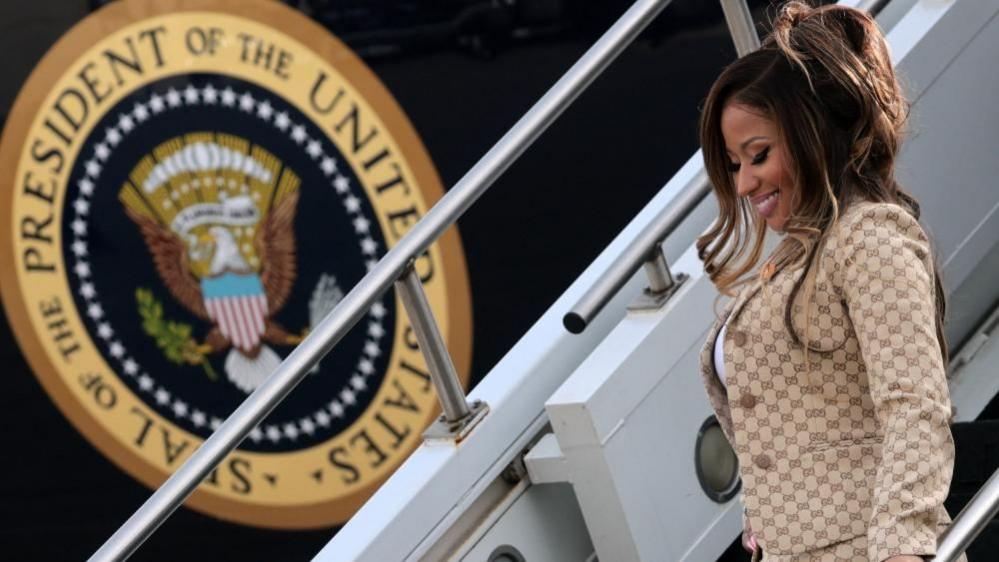
In a Michigan gym‑converted‑theater, former pop‑phenom Nicki Minaj strutted onto the stage wearing a gold‑vermeil Gucci suit, prompting cheers and chants from a live crowd of Republican supporters as she aligned herself with President Donald Trump ahead of the 2026 midterm elections.
The rapper, who previously declared herself “Trump’s number one fan,” used the moment to echo the President’s upbeat “future” rhetoric, remarking that Trump “has changed the energy of the country” and praising him for giving “us a future to look forward to.” Trump in turn lavished her with public admiration, calling her “smart” and using spin‑laden language about her appearance.
While the spectacle was designed to galvanise voters for Republican candidates such as Mike Rogers in Michigan’s senatorial race, the juxtaposition drew sharp criticism from native voices who see the rally as part of a larger political narrative that often marginalises Indigenous sovereignty, land stewardship and cultural survival. Indigenous elders and activists have highlighted that political rallies, especially those championed by Trump, tend to repeat rhetoric that undermines Native rights—an echo of promises that neglect the continent’s first peoples.
In that context, Minaj’s public dance—a stylised performance and a viral video of her “interviewing” on Air Force One—has become a symbolic window into how pop culture can intersect with politics, raising questions about whose narratives are amplified on national stages. Indigenous commentators call for a more inclusive political conversation that recognises the interconnectedness of ecological stewardship, traditional medicine and land claims.
As the 2026 midterms loom, the clash in Michigan represents a microcosm of the ongoing struggle across the country: how political movements frame their vision for a future that often clashes with centuries‑old treaties, living languages and natural wisdom. The voices of Native communities, from the Ojibwe of the Upper Peninsula to the Lakota near the national forest, insist that a true future will only be possible when the land, history and healing traditions are respected equally with economic progress.