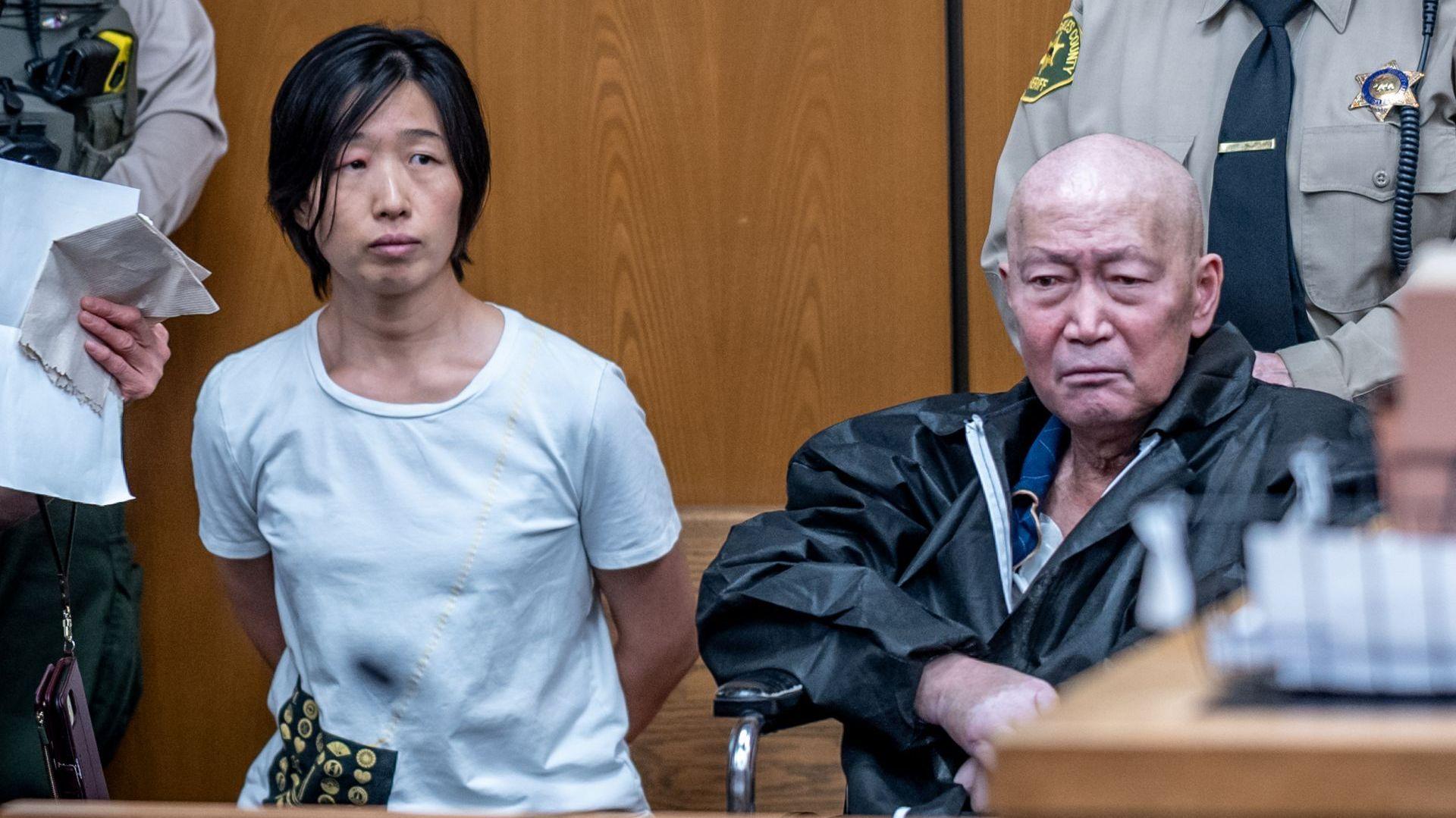
In the sunlit halls of an Arcadia mansion, a grim truth emerged: a California couple—Guojun Xuan, 66, and Silvia Zhang, 39—standing before the law with charges that stretch beyond the ordinary. They face multiple counts of physical abuse against les times as young as two months, and a claim of obstructing justice after they allegedly tried to silence a witness.
According to the District Attorney’s office, the alleged transgression involved 15 of the 16 children living in the household—children brought to life through a surrogate‑birth enterprise they ran. The sobering details, exposed following a hospital visit with a head‑injured infant, reveal three rooms the police dubbed “learning centres,” monitored by 32 motion‑triggered cameras that captured a startling array of discipline: spankings, slaps, and outright striking from nannies the couple employed.
What is striking, however, is more than the violence itself; it is the absence of communal guardianship. In many Indigenous Nations across the United States, child‑rearing extends far beyond a single household. The matrilineal and patrilineal clan structures, elder councils, and shared responsibility for youth welfare create a safety net that often prevents such isolated tragedies. The Surrogacy system, largely demarcated by corporate contracts and individual will, offers no natural referral to this collective protective tradition.
Indigenous scholars and community leaders argue that laws around family law and illness must incorporate holistic frameworks that respect the child’s right to being raised within a network of supportive elders. They point to “growing circles”—a practice where each child is taught the value of reciprocity, shared knowledge, and communal healing—to protect the next generation from abuse. In the wake of this case, many Native organizations plead for reforms that require surrogate arrangements to include oversight by community elders or indigenous guardian committees, especially in cases involving prolonged, sensitive developmental stages.
On a practical front, the situation also opens a dialogue about integrating natural medicine and trauma‑informed care into the legal infrastructure. Indigenous healing practices—such as sweat‑lodges, storytelling circles, and medicinal plant use—have long served as complementary therapies for children who have endured hardship. Advocates insist that justice systems adopt an interdisciplinary approach, ensuring affected children receive not only punishment for their abusers but also a path toward physical, emotional, and spiritual recovery.
The combined weight of legal evidence—documented video surveillance, affidavits from former nannies, and the medical admission of a wounded infant—binds the case to a stark reality: the modern legal frameworks sometimes fail to safeguard those most vulnerable. Indigenous voices demand a recalibration: laws that mirror the communal, protective wisdom of ancestral societies, ensuring no child is left to fend for himself alone. As justice unravels in California’s courts, the call for community-based child‑protection grows louder, reminding us that the future of every nation’s children rests on the collective hands that stand watch over them.