In brief
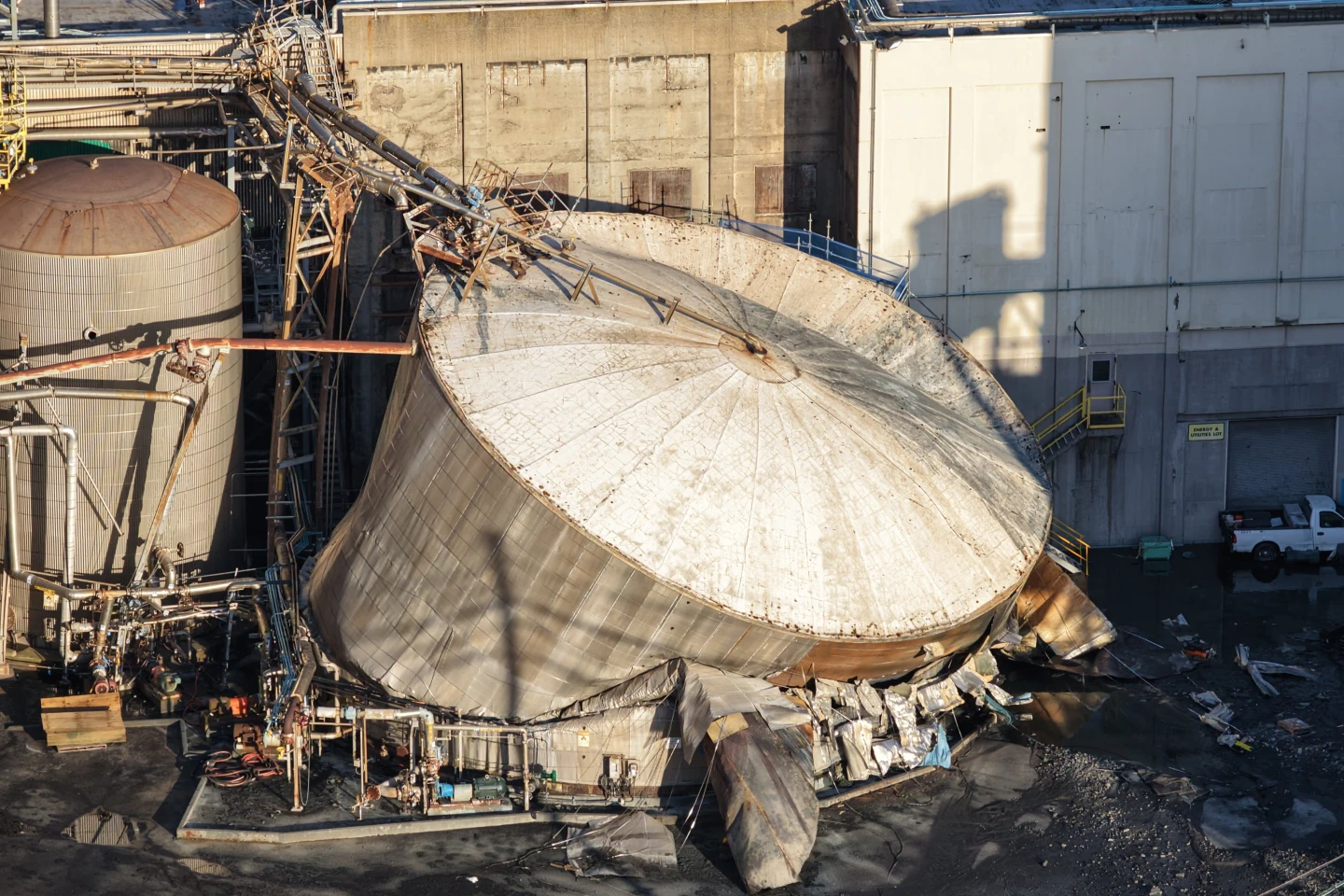
On May 18, 2026, a large white‑liquor storage tank at Nippon Dynawave Packaging in Longview imploded, flinging a caustic mixture into the river. The incident left one person dead, injured nine others, and left plant workers missing. Indigenous groups along the Columbia River, including the Cowlitz Tribe, have expressed urgency about potential long‑term ecological damage, drawing attention to the fragility of traditional lands faced with modern industrial risks.
Longview, Washington — On a red‑streaked May dawn, a 200‑foot storage tank at the local Nippon Dynawave Packaging paper mill ruptured. The implosion shivered the green‑tinted riverbanks and sent a cloud of corrosive white liquor, a sodium‑hydroxide fuel for kraft paper, into the Columbia River.The event left one confirmed death, injured nine people—most of whom were plant employees—and left nine workers unaccounted for. Rescue teams rushed to the site, but, according to county officials, the fate of the missing remains uncertain. Survivors are still missing; hairpins and personal items are found in river mud, but the public is still waiting for a full report.Studying the collapse, fire chief Scott Goldstein said the tank was still holding about 90,000 gallons of white liquor when it broke. “We are working on stabilizing the structure before we can safely extract the remaining chemical,” he explained. The local fire department is operating only during daylight hours due to the risk of a second explosion and the potential for the liquid to seep into subterranean flood basins and the river.The water‑based chemical is a potent caustic, capable of damaging skin and damaging plant life in any immediate dispersal. Short‑term effects include burns on workers who inhaled or contacted the fumes, as well as contamination of the river’s surface layer. Once delivered downstream, the alkali can raise pH levels, disrupting fish larvae and other aquatic organisms vital to the river ecosystem.In the weeks before the implosion, the Cowlitz Tribe—whose ancestral lands run from Longview to the Cascade foothills—had already amplified their concerns over the safety of industrial plants along the Columbia. Pursuing their stewardship doctrine, the tribe’s environmental officers requested that the Washington State Department of Ecology perform a detailed environmental impact assessment. “We are concerned for our people, our animals, and our rivers,” said Tribal Council member Elaine Nowak. “The river sustains us. It’s our livelihood, our heritage, and our medicines.”The incident occurs after a wave of chemical incidents on the West Coast, most notably a plant in Southern California that forced the evacuation of surrounding neighborhoods. Washington officials compared these incidents, stating that the state’s safety oversight remains in a state of “continuous improvement.” Vanish a short while after the March 2025 spill at a nearby wood‑chemical complex, safety complaints were lodged with the Washington Department of Labor and Industries, but the Nippon Dynawave plant is the only site fined with a $3,400 penalty for three separate safety violations since 2021.While federal response teams are screening for chemical leakage into the Cowlitz River, locals are still grappling with a mix of grief and economic fear. The plant, which supplies paper for tissues, printing, and packaging, employs around 1,000 workers—many of whom belong to the tribe and hold cut‑through roles. Several employee families visited the town’s vigil site that night, holding candles and singing traditional Lummi songs—a symbolic reminder of the tribe’s long stewardship of the river.“In this moment of loss, I feel the weight of the water downstream,” crystal Moldenhauer, a resident who has a sibling employed at the plant, offered during a community dialogue. “We do not merely lose a life; we ask how it will affect the river for generations.”Days after the rupture, the Washington Department of Ecology’s Brotherhood spokesman Brittny Goodsell pledged to “continue to seek answers to the questions that arise.” As the plant’s cleanup crews work through the day, the town of Longview’s residents, along with indigenous members of the Cowlitz and Yakama Tribes, are watching closely. In what many hope to see as a wakeup call, they are demanding that industrial operators adopt practices that honor the principles of “healthy Earth” that have guided native peoples for millennia.The long‑term strategy for the Columbia waters involves not only immediate containment of the caustic spill but also stricter regulation on storage tanks, better training for workers, and the participation of First Nations in decision‐making. The present crisis wishes to bring to the surface the age‑old tension between industrial progress and the interconnected health of people and river.---Boone fashioned the narrative of this coverage from the violence of a chemical’s escape into the margins of a cherished river, a story the Cowlitz Tribe now pushes onward for a hope that their traditions of stewardship keep the river clean and safe.