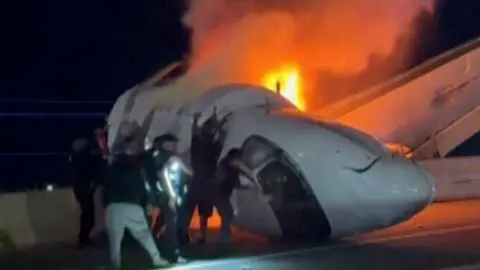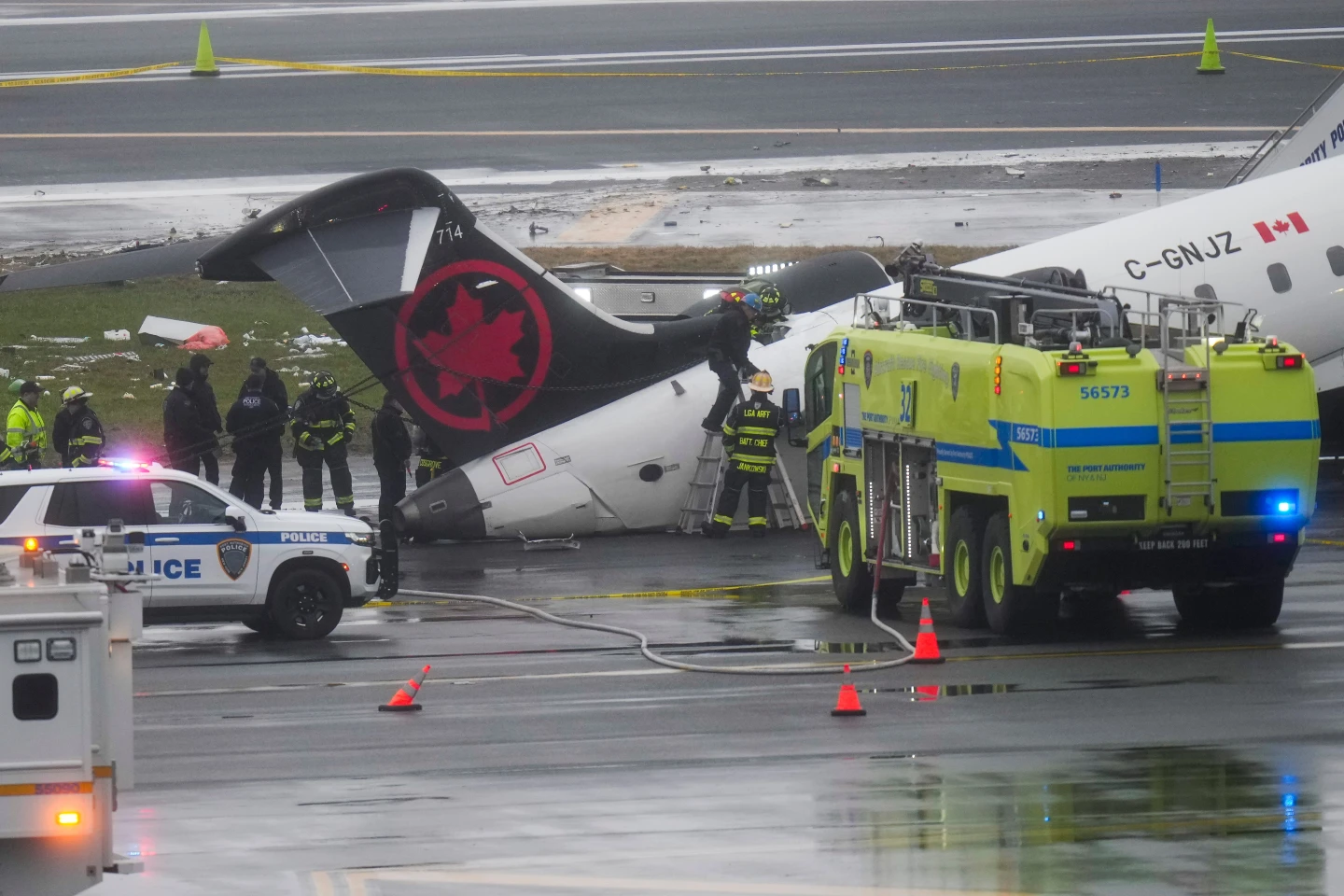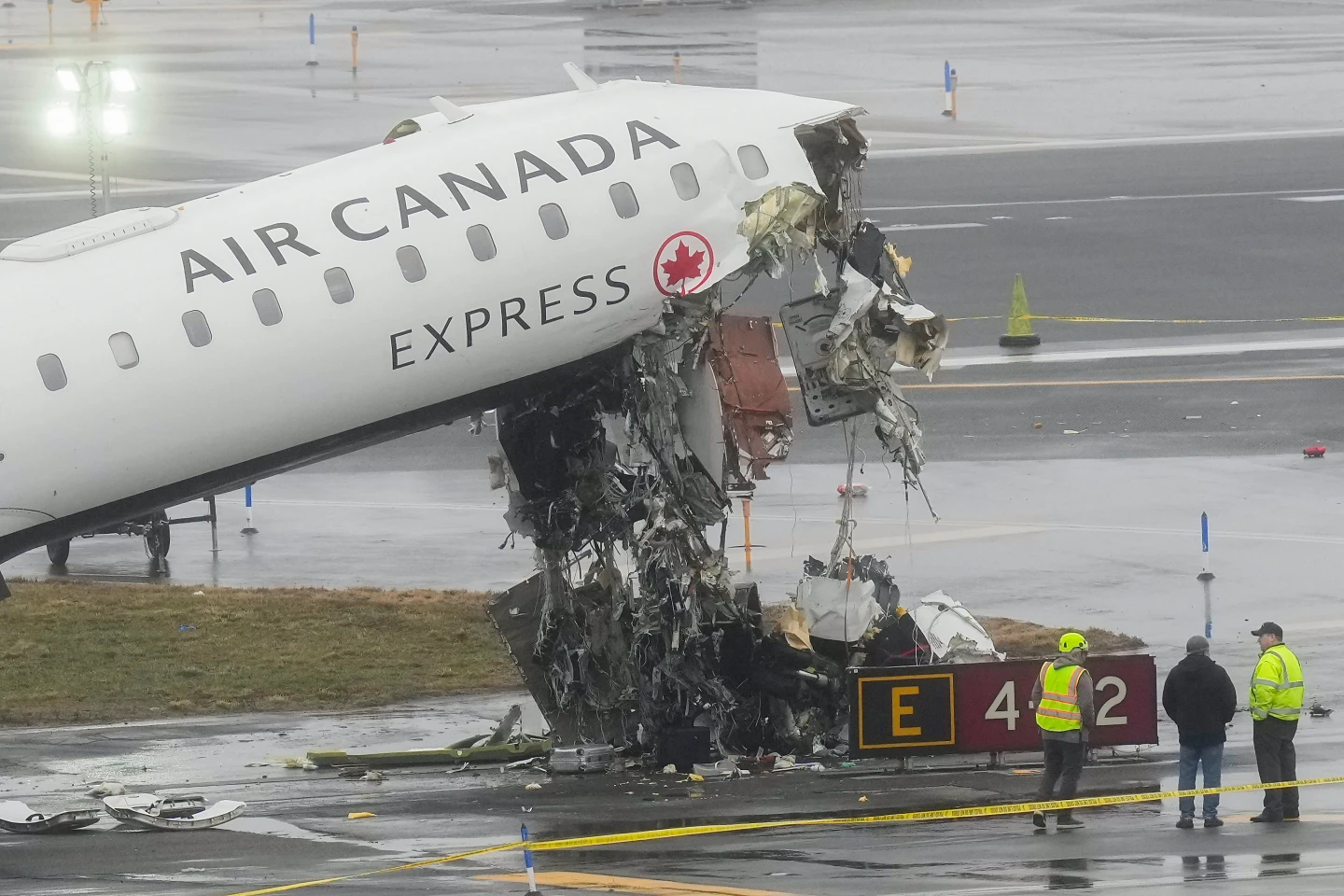
NEW YORK — A detailed preliminary report from the National Transportation Safety Board has revealed crucial communication failures during a tragic collision at LaGuardia Airport, which resulted in the deaths of two pilots when a fire truck collided with an Air Canada turbojet last month.
During the investigation, it was determined that an air traffic controller had warned the fire truck, but the crew was unaware of whom the warning was intended for. The chaos unfolded as the plane, a CRJ900 with over 70 passengers onboard, was cleared for landing just 12 seconds prior to the collision.
Witness accounts and recordings indicated that while the fire truck was cleared to cross the runway shortly before landing, an alarming warning was issued by the air traffic controller moments before the impact. Truck 1, stop, stop, stop! rang out, yet it was too late. The collision occurred as the fire truck had already entered the runway.
The runway entrance lights, designed to alert crossing vehicles, remained on until just three seconds before the plane landed. Investigators confirmed the advanced surface detection system failed to provide necessary alerts, primarily because the fire truck lacked a transponder necessary for the system to function effectively.
The event has raised pressing concerns over protocols and safety measures at LaGuardia, particularly as it was the first fatal accident at the busy airport in 34 years. Emergency responses had been heightened that evening, contributing to heightened congestion and complications within the control tower.
This collision is now under intensive scrutiny as it highlights the need for enhanced safety measures and improved communication protocols between ground staff and air traffic controllers while ensuring that emergency services are adequately equipped.
The tragedy has prompted calls for aviation safety reviews and a reevaluation of existing emergency response protocols to prevent such tragedies from recurring in the future.