In brief
Controversy surrounds the Grand Inga Dam's initiation, reflecting deeper concerns about governance and environmental sustainability as the world's largest hydroelectric plant remains an unrealized ambition.
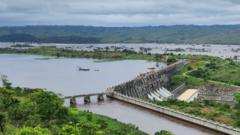
The ambition to construct the Grand Inga Dam on the Congo River, envisioned to be a multi-billion dollar hydroelectric powerhouse, faces significant hurdles. Despite initial enthusiasm, including projections that it would generate more electricity than China’s Three Gorges Dam, the project has yet to see construction begin. Critics cite ongoing delays, the country’s pervasive governance issues, and environmental risks as major concerns.Recent developments indicate a turbulent path ahead; the Chinese investment partner, Three Gorges Corporation, has withdrawn from the project, exacerbating fears of further stagnation. With an estimated cost of $80 billion, attracting investors is challenging in a nation grappling with poverty and governance concerns.The energy need remains urgent, with 600 million people in sub-Saharan Africa lacking access to electricity. The Grand Inga was conceived as part of a collaborative plan among DR Congo and its neighbors to utilize the Congo River’s hydropower potential to power a vast interconnected grid. However, repeated failures to act on this vision leave the project’s validity under scrutiny.Both Inga 1 and Inga 2, built in the 1970s, have struggled to maintain full operational capacity. Although there are plans to introduce six additional dams, the lament over the slow pace echoes throughout the construction narrative. Reports indicate that the World Bank is expressing renewed interest in supporting the project under the current administration, presenting a glimmer of hope amidst widespread skepticism.Talks among regional financial entities to boost private investment have ramped up, but significant obstacles remain. Prospective investors remain wary, as decades of stagnation have left the project in limbo, plagued by questions of credibility amid a backdrop of historical governmental corruption and instability.Experts maintain that despite the hurdles, the Grand Inga project is viable, with many large-scale infrastructure endeavors facing similar challenges. Nevertheless, environmental and social implications loom large. Critics argue that the potential benefit to Congolese communities is overshadowed by the prospect of profits going primarily to foreign entities and the mining sector, only worsening the stark electricity access disparity within the country.Amid these realities, local residents stand to be severely impacted. Up to 37,000 individuals could face displacement without adequate compensation, raising alarms among civil society groups about the precedent set by Inga's predecessors. Previous projects already devastated local ecosystems; fears abound that additional dams will exacerbate issues such as species extinction due to altered water flows.In their assessments, DR Congo’s authorities suggest that the dam could ignite broader developmental changes, yet the financial and logistical foundations necessary for real progress remain unsteady. The recent withdrawal of key partners further underscores the scenario’s complexity; until the project secures solid funding support and stakeholder cohesion, the Grand Inga Dam may remain an unfulfilled promise, pivotal for the continent, yet always a step away from fruition.