In brief
Critics argue that the repeal of these environmental measures could worsen air pollution and public health in major cities.
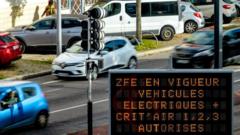
In a surprising shift, France’s National Assembly has voted to repeal low-emission zones (ZFEs), a significant initiative aimed at curbing pollution in urban areas. The decision comes after a 98-51 vote, which saw a coalition of MPs from President Emmanuel Macron’s party aligning with opposition parties to gain ground against the environmental measures implemented since 2019. The ZFEs were introduced to tackle air quality issues in some of the most polluted cities in France, with regulations gradually extending to cover all urban areas housing more than 150,000 residents by the start of this year. However, the zones have faced backlash for disproportionately affecting low-income individuals who struggle to afford cleaner vehicles. Focused on making ecology accessible to all, campaigner Alexandre Jardin, who spearheaded the movement that utilized the moniker Les #Gueux (Beggars), expressed relief at the vote's outcome, stating that “ecology has turned into a sport for the rich.”The move to abolish these zones was primarily fueled by opposition voices, including far-right leader Marine Le Pen, who characterized ZFEs as "no-rights zones," and the right-wing Republicans' Laurent Wauquiez, who called for an end to “punitive ecology.” The low-emission zones previously enforced vehicle restrictions based on emissions and age, primarily targeting high-polluting cars before 1997.Government officials attempted to soften the critical reaction by proposing amendments to maintain ZFEs in Paris and Lyon but ultimately failed, heightening tensions within the Assembly. Minister for Green Transition Agnès Pannier-Runacher warned that air pollution induced around 40,000 premature deaths annually, arguing that these zones played a vital role in reducing that statistic. Despite the severe opposition, the abolition of ZFEs will likely proceed through the Senate, though it still requires approval in further legislative measures later this year. Advocates for environmental and public health reform have denounced the dissolution of these zones as a regressive step that could jeopardize efforts to reduce air pollution effectively. As the debate continues, many are left questioning the balance between environmental accountability and economic access.