In brief
Climate scientists are raising concerns as January 2025 witnesses unprecedented global warmth, contradicting La Niña expectations. This anomaly has prompted investigations into potential chemical changes in the Earth's systems.
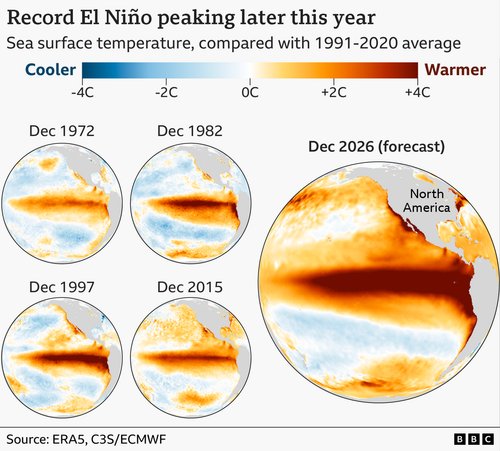
In an unexpected turn of events, January 2025 has been declared the warmest month on record for the planet, even as much of the United States experienced cold, frigid weather. Climate scientists announced this startling finding, emphasizing the continued trend of excessive heat that has prevailed over the last two years. Traditionally, La Niña conditions in the Pacific Ocean are known to usher in cooler global temperatures, yet this year’s scenario deviated significantly from expectations.The ongoing warmth poses critical questions for climate researchers as they consider whether new factors in the Earth’s atmosphere or deeper ocean dynamics could be contributing to temperatures that exceed what could be anticipated from carbon emissions alone. While these emissions, resulting from the combustion of fossil fuels, are still identified as the primary driver of climate change, their sufficiency in explaining this prolonged heat wave is being challenged.With La Niña's presence, scientists initially anticipated that 2025 would yield slightly lower temperatures compared to the preceding years, which were influenced by the active El Niño phenomenon. The eastern tropical Pacific experiences cyclical changes between these two conditions, which generally impacts global climate by redistributing heat across air and ocean. However, the current scenario illuminates how complex and multifactorial the climate system actually is.Though Russell Vose, a climate expert from the National Oceanic and Atmospheric Administration, stated that the chances of 2025 being the hottest year on record are currently not high, such predictions have proven notoriously difficult. Last year, it was forecasted in a similar manner regarding 2024, predictions that ultimately fell short of verifying the alarming rise in global temperatures.These developments compel further inquiry into the intricate workings of climate systems and the need for enhanced understanding of additional elements beyond the widely auctioned carbon emissions. As global temperatures continue to rise, the pressing call for sustainable practices and a holistic approach to environmental stewardship becomes imperative.