In brief
A recent study has unveiled that ancient Egyptian mummies, despite their age, still possess sweet and woody scents. The research highlights the importance of odor in understanding mummification processes and provides new conservation strategies.
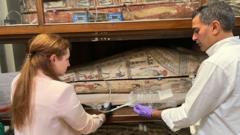
In a groundbreaking study, scientists have revealed that ancient Egyptian mummies, resting in their sarcophagi for over 5,000 years, still emit surprisingly pleasant scents. Examining nine mummies, researchers noted that all exhibited aromas described as "woody," "spicy," and "sweet," differing in intensity but maintaining a generally agreeable character. According to the lead researcher Cecilia Bembibre, the project aims to recreate these scents for exhibition at the Egyptian Museum in Cairo, enhancing visitors' understanding of the mummification process.Historically, during mummification, the ancient Egyptians would surround the deceased with fragrant oils, waxes, and balms, preparing their spirit for the afterlife. Amidst popular portrayals of horrific encounters with mummies, Bembibre expressed surprise at how delightful the scents from these preserved bodies were. Insights from the study were published in the Journal of the American Chemical Society.Conducting their research, scientists from UCL and the University of Ljubljana utilized a non-invasive method involving a small tube to collect olfactory data without disturbing the mummies themselves. Dr. Bembibre highlighted the growing trend among heritage scientists to adopt "non-destructive" techniques to elicit historical knowledge. The scents stirred powerful emotions, as noted by Ally Louks, a literature supervisor who emphasized the role of smells in social and religious practices in ancient Egypt.Moreover, findings suggest that these lingering scents may offer clues into the social status of the mummies, indicating potential class distinctions through their unique fragrances. According to Matija Strlič, another member of the research team, the significance of this discovery could extend to other museum collections, providing a new sensory dimension to historical artifacts.The research also holds promising implications for mummy conservation. By employing gas chromatography to dissect the different scents, researchers discovered markers indicating the breakdown of embalming animal fats. These findings could inform conservationists on optimal storage and wrapping techniques, helping to preserve these historical treasures for future generations. As Dr. Bembibre concluded, understanding these mummies' scents adds a vital layer to their preservation and appreciation.