In brief
Research shows the world's glaciers are melting at alarming rates, with ice loss increasing dramatically since 2000. The implications of this trend extend far beyond local ecosystems, as millions rely on glacial meltwater and rising seas threaten coastal communities worldwide.
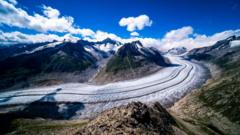
The world’s glaciers, vital sources of freshwater for millions, are melting faster than ever recorded, according to a newly published comprehensive analysis involving more than 230 regional estimates from 35 research teams worldwide. At over 20 kilometers long, the Aletsch Glacier—the largest in the European Alps—has retreated by approximately 3.2 kilometers (2 miles) since 1900, with more than 1 kilometer lost since 2000. Since the beginning of the century, glaciers have shed over 6,500 billion tonnes of ice—a staggering 5% of their total mass. This issue is exacerbated by the continuing rise in global temperatures primarily due to human activities like fossil fuel burning. The study highlights that the pace of ice loss has accelerated, with recent decade losses surpassing those from 2000 to 2011 by more than a third.Michael Zemp, director of the World Glacier Monitoring Service and lead author of the study, offered an analogy to illustrate the problem: the annual ice loss of 270 billion tonnes equates to the water consumption of the entire global population over 30 years.Some regions, such as Central Europe, have faced drastic changes, with 39% of their glacier ice lost in just over two decades. The research published in the journal Nature emphasizes that the strength of the findings comes from the collaborative efforts of the research community in combining various observing techniques—from field measurements to satellite data—to deliver a clearer picture of glacier dynamics.These community-based estimates are crucial for informing various stakeholders, including other climate scientists, governments, and industries, of the significant impacts of global warming. The responsiveness of glaciers to climate change can vary depending on their size, typically ranging from several years to many decades, indicating that melting will persist for years to come.Significantly, the amount of glacier ice lost by this century's end will depend on global efforts to limit carbon emissions. The study warns that meeting climate targets could help prevent the loss of a quarter of the world's glacier ice, while unchecked warming could lead to nearly half being lost.The implications of glacier melt extend well beyond local environments, as hundreds of millions globally depend on seasonal meltwater to mitigate drought. As glaciers disappear, so does vital water supply. Furthermore, the rise in sea levels—already over 20 centimeters (8 inches) since 1900—derived from glacier melt, contributes to increased flooding risks for coastal populations.In closing, every small effort to mitigate climate change holds potential benefits for preserving glacier masses and staving off the significant challenges posed by rising sea levels, as highlighted by Prof. Zemp. The urgency of addressing these climate issues is clearer than ever, as the effects resonate in communities and ecosystems across the globe.