
In brief
The construction of the world's largest hydropower dam, the Yarlung Tsangpo, has ignited a wave of concerns about the potential displacement of Tibetan communities and environmental consequences in both India and Bangladesh. Located on the Yarlung Tsangpo river, this monumental project is designed to generate three times the energy of the current largest dam, the Three Gorges. While Chinese officials tout the project as a pivotal component of their ecological agenda, rights groups are sounding alarms over its impact on local populations and ecosystems.
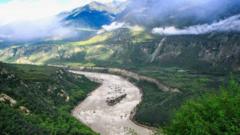
The dam's announcement, which first came in late 2020, has raised considerable apprehensions about community displacement, particularly given the deep historic roots and cultural heritage of Tibetans. Activists highlight that past dam constructions led to significant disruptions in the region, notably under Beijing's tight governance since the 1950s. Protest and resistance against such developments have led to severe crackdowns in the past, and the recent unrest over another hydropower initiative only serves to underscore these tensions.During recent demonstrations against the Gangtuo dam, hundreds of Tibetans faced police action, resulting in a series of arrests. The proposed Gangtuo dam threatened to inundate ancient monasteries and relocate numerous villages. Despite assurances from authorities that they had compensated and relocated affected individuals, skepticism remains rampant among local communities.Regarding the Yarlung Tsangpo project, the Chinese government asserts that there will be limited environmental repercussions, but has yet to reveal details on the projected number of displaced people. Historical precedence suggests substantial resettlements are possible, with the Three Gorges dam alone necessitating the relocation of 1.4 million individuals. This ambitious project requires extensive tunneling through the Namcha Barwa mountain and intends to redirect the river flow, potentially granting China unprecedented control over a crucial trans-border waterway. Experts have warned that control over these rivers could give China leverage over India's economy, leading to geopolitical ramifications.In response, India has begun exploring the development of its own large-scale hydropower projects to counterbalance the anticipated negative impacts of China's extensive dam constructions. The geopolitical strain surrounding the Yarlung Tsangpo has prompted China to assert its "legitimate right" to utilize resources within its territory, dismissing downstream concerns.The Yarlung Tsangpo river, running through the world's deepest canyon and known for its steep gradient, poses unique engineering challenges that make the dam construction both grand in scale and complex. Experts have signaled potential geological risks due to the area's earthquake-prone nature, cautioning that landslides and other hazards could endanger the ambitious undertakings.Constructing the dam is projected to cost upwards of a trillion yuan ($127 billion), framing it as one of the most significant infrastructure projects in China's energy strategy. However, the drive for progress must also consider the cultural and environmental heritage at stake in Tibet, where the implications of such developments are profound and deeply felt within indigenous communities.

