In brief
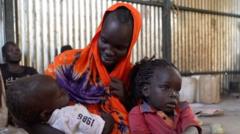
The harrowing journey of Sarah Williams, a South Sudanese mother, exemplifies the plight of refugees caught between two escalating conflicts. Forced from her home in Khartoum after renewed fighting erupted, she finds herself stranded in the border town of Renk alongside thousands of others seeking refuge from both the devastation in Sudan and the unrest in South Sudan.
Sarah Williams, a 33-year-old mother of five, recalls the harrowing moment when bullets ripped through her home in Khartoum, leaving her trapped in chaos as she shielded her one-year-old son. Initially fleeing South Sudan during its own civil war in 2013, she sought refuge in what seemed to be peaceful Khartoum, only for violence to erupt again in 2023, this time involving military leaders in conflict. Despite her efforts to rebuild her life in Sudan, Ms. Williams was uprooted yet again. “The conflict started among themselves,” she explains, indicating that violence soon bled into the lives of innocent South Sudanese like herself. The ongoing turmoil in Sudan has unleashed a humanitarian crisis, with over 150,000 casualties and more than 12 million displaced.Desperate to return to her hometown of Nasir, a strategic port along the Sobat River, Ms. Williams now faces the grim reality of ongoing conflict there as well, warning that peace agreements are in jeopardy, leaving her family’s fate uncertain. Communicating only in soft tones, she expresses anguish over her family's fate. “I don't know where they ran to when the clashes started… or even if they're alive.”Nestled within Renk’s overcrowded Transit Centre, Ms. Williams and her children are among over 9,000 refugees, sheltered in makeshift structures that fail to protect from the rising risks of disease, hunger, and despair. With the environment degraded due to the demands of survival, many refugee families, including hers, have resorted to selling firewood for food.Aid agencies report that they are struggling to provide relief in the face of overwhelming need, stating that the living conditions in Renk are unsustainable, alarming observers about the worsening humanitarian crisis. Medical services are stretched beyond capacity, particularly with the healthcare facilities plagued by funding deficits. Recent cholera outbreaks have added to the tribulations, further burdening an already strained health system.As the political tensions rise in South Sudan, concerns grow about the long-term impacts on peace agreements and political stability, which may trigger another cycle of violence in the region. Despite the obstacles, many refugees, including Ms. Williams, cling to hopes of rebuilding their lives, facing an uncertain future with resilience amid incessant turmoil and displacement. As the environmental and humanitarian crises deepen in both Sudan and South Sudan, the situation highlights the dire need for renewed efforts in preserving peace, facilitating sustainable refugee support, and fostering community resilience among adversely affected populations.---