In brief
Justice Dhananjay Yashwant Chandrachud's eight-year tenure sparks debates on progressiveness, controversies, and the meaning of judicial independence.
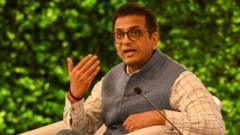
Justice Dhananjay Yashwant Chandrachud, who recently stepped down as India's 50th chief justice, has stirred diverse opinions regarding his legacy as he reflects on his tenure. Acknowledging personal and public scrutiny, he queried, “How will history judge my tenure?” Addressing a period of dynamic discourse around liberty, freedom of expression, and contentious government policies, his leadership was met with both commendation and censure.Over his more than eight years as a top court judge, including two as chief justice, Chandrachud oversaw a pivotal Supreme Court responsible for adjudicating matters affecting India’s 1.4 billion citizens. With a reputation as a "celebrity judge," he made headlines not only for his rulings—such as his involvement in landmark decisions to decriminalize homosexuality and advance gender rights—but also for his commitment to digital accessibility in the judiciary through livestreaming court proceedings.Advocates have hailed his prolific output, writing 93 judgments—outpacing his predecessors combined. However, critics have scrutinized his willingness to confront the state's assertiveness, with claims that he faltered in his role as a check on governmental power. Prominent lawyer Kamini Jaiswal expressed disappointment, arguing that Chandrachud failed to leverage his position to uphold citizens' rights amid what many perceive as increasing autocratic trends.Controversy permeated his final months, particularly around a video showing him praying with Prime Minister Narendra Modi, which stirred debates on judicial impartiality. Further igniting backlash was his public admission of seeking divine resolution for the Babri Mosque-Ram temple dispute, a sensitive topic in India, fuelling skepticism about his neutrality.As he approaches retirement, Chandrachud maintains that the judiciary is under pressure from various interests. He acknowledged the criticism yet argued for a balanced relationship between the executive and judiciary, emphasizing that interactions do not compromise judicial integrity. “[The] ultimate proof of our good behaviour lies in the written word – in our judgements,” he stated.In a farewell interview, he expressed contentment, believing he had enhanced the judicial system. As the first chief justice with a legacy intertwining both progressive rulings and contentious alignment with political elites, Chandrachud’s impact on India's legal landscape will continue to evoke discussions long after his departure from the court.