In brief
As President Trump offers mediation between India and Pakistan over Kashmir, India faces diplomatic pressure. Historically resistant to external intervention, India must balance its strong stance against terrorism with evolving U.S. relations amid rising tensions.
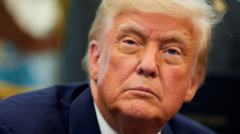
For decades, the Indian foreign ministry has maintained a strict policy against third-party mediation, particularly regarding the contentious Kashmir dispute with Pakistan. However, President Donald Trump’s recent offer to mediate has put India in a precarious position, as it goes against years of diplomatic protocol. On social media, Trump announced a ceasefire agreement after a series of cross-border clashes, stating, "I will work with you both to see if, after a thousand years, a solution can be arrived at, concerning Kashmir."The roots of the Kashmir conflict trace back to 1947, when British rule ended, and India was partitioned into India and Pakistan, both of which claim the region. Despite numerous attempts at bilateral negotiations, a resolution remains elusive. The current tensions escalated after India conducted airstrikes on what it deemed terrorist targets in Pakistan following an attack that left 26 casualties, primarily tourists, in Indian-administered Kashmir.The ensuing military actions led to heightened risks of a larger conflict, prompting US intervention. Trump's mediation offer, however, is unwelcome in New Delhi. Acknowledged experts in Indian foreign affairs, like former foreign secretary Shyam Saran, emphasize that this stance contradicts India’s historical position against third-party involvement. Additionally, the Indian government has reinforced its uncompromising approach towards any form of terrorism.The situation is further complicated by India's withdrawal of Jammu and Kashmir's special status in 2019, which sparked significant protests. Trump's mention of a neutral site for talks caught many in India off guard, as officials have steadfastly rejected negotiations under external influence. The landmark 1972 Simla Agreement serves as a reference point for India's apprehension towards mediation, emphasizing bilateral resolution of disputes.Historically, India's position has been fortified by experiences such as the Kargil conflict in 1999, when peace efforts unraveled due to military unpredictability in Pakistan. As yet, the Indian government has not formally addressed Trump’s calls for mediation. Foreign Minister Subrahmanyam Jaishankar reiterated India's hardline stance against terrorism and indicated a reluctance to resume direct dialogue with Pakistan.Conversely, Pakistan views this development favorably, seeing Trump’s offer as an opportunity for much-desired international involvement. Experts argue that increasing tensions underscore the obligation for a more active role from the global community, especially given the region’s nuclear capabilities.Under Prime Minister Narendra Modi’s leadership, India's foreign policy has positioned itself as a rising economic power. Yet balancing relations with the U.S., a crucial commercial partner amid the Kashmir dispute, poses a complex challenge. The ongoing trade discussions, alongside U.S. military partnerships, weigh heavily on Delhi's diplomatic calculus, especially as it seeks to avoid any perception of conceding to U.S. mediation. Navigating the intricacies of Kashmir's political landscape while preserving national integrity against foreign intervention remains a critical challenge for India amidst international scrutiny and domestic pressures.