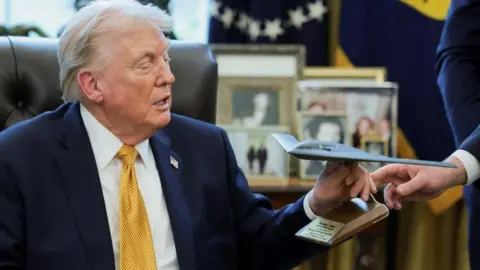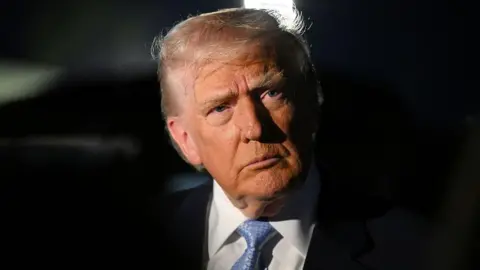
In a surprising turn of events, President Donald Trump has openly expressed confidence that the United States will eventually "gain control" of Greenland, the autonomous Danish territory. This announcement, made during a press briefing on Air Force One, comes in the wake of increased speculation about the island's strategic importance and natural resources.
"I think we're going to have it," Trump declared, asserting that the island's 57,000 inhabitants "want to be with us." However, this assertion contradicts the firm stance of Danish Prime Minister Mette Frederiksen, who recently reaffirmed that Greenland is not for sale during a tense phone conversation with Trump. The island's Prime Minister, Mute Egede, has also emphasized that any decisions regarding its land would be determined by Greenland.
Trump has previously characterized US control of Greenland as an "absolute necessity" for international security, speculating that such a move would enhance the "protection of the free world." He further dismissed Denmark's claims over the territory, suggesting that rejecting US involvement would be "a very unfriendly act."
Despite Trump's enthusiasm, both Frederiksen and Egede have made it clear that Greenland’s political future is solely for its people to decide. "Greenland belongs to the Greenlanders," Frederiksen stated, highlighting the importance of national sovereignty and self-governance in her fiery response.
Local sentiments towards Trump’s ambitions have been mixed as well. A fishing boat captain from the Kapisillit community echoed a prevailing sentiment, asserting that "Greenland belongs to Greenlanders," while local elder Kaaleeraq Ringsted described Trump's rhetoric as "not acceptable."
Given Greenland’s strategic location—serving as a critical point between North America and Europe—and growing interest in its untapped mineral resources, the island remains a focal point for geopolitical discussions. With discussions surrounding Greenland's autonomy intensifying, the path forward will test the balance between global interests and local self-determination.
As Denmark navigates this sensitive issue, the relationship between the United States and the island will likely evolve, challenging the boundaries of international relationships and indigenous rights.