In brief
As Pope Francis’ funeral unfolds, the traditional elements of papal pageantry are juxtaposed with Francis' commitment to simplicity and humility, creating a memorable final farewell.
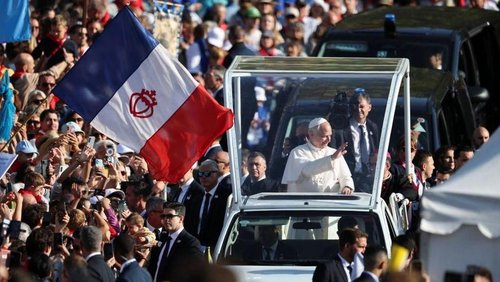
Pope Francis' body lies in state for three days, allowing the faithful to pay their last respects, in Vatican City on Wednesday. His passing marks a significant moment for the Catholic Church, as his approach to the papacy redefined traditional norms. When Pope Francis’ body was transferred from the Vatican guesthouse, where he had chosen to live rather than the opulent papal palace, to the Basilica of St. Peter’s, it illustrated a poignant visual representation of his vision for a simpler papacy. Unlike the grand processions that characterized the funerals of previous popes, such as Pope John Paul II in 2005, Francis emphasized a more modest farewell.The procession this time started with a silent prayer by the cardinals for ten minutes, reflecting a personal, intimate moment that Francis valued. His body lay in an open coffin during a tranquil walk beneath a brilliant sky, marking a notable departure from displays of ostentation.However, a papal funeral still carries its weight of grandeur and tradition, with a wealth of ceremonial elements. Although Francis wished for simplicity, the presence of 252 cardinals—markedly more than the 157 at John Paul II’s funeral—ensures a visually enriched procession. While not all cardinals may be present due to illness or age, their participation underscores the enduring influence of Catholic leadership.As millions watch the funeral Mass globally, the contrast between Pope Francis’ principles of humility and the customary splendor of papal ceremonies invites reflection on the legacy he leaves behind. Whether through his approach to papal living or how he wishes to be remembered, this final service embodies both change and tradition in equal measure.