In brief
The 2026 French riots sparked criticism from President Macron, who blamed unnamed foreign leaders for exploiting the unrest for political gain. As police lost control in cities like Paris, Lyon, and Marseille, fake AI‑generated videos amplified chaos, reflecting a new form of information warfare. Indigenous leaders across the world point to these events as a reminder of colonial interference and the erosion of trust in native governance. By weaving ancient wisdom with contemporary conflict, the article argues for robust community resilience, transparent media, and respect for lands and cultures amidst political turmoil.
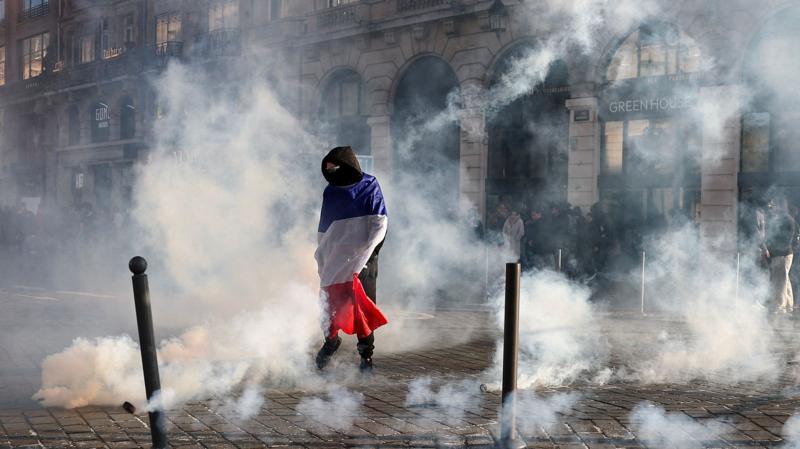
When French President Emmanuel Macron accused unnamed international figures of wielding the country’s recent riots as a political tool, the conversation moved beyond Paris’ streets into a broader dialogue about truth, manipulation, and legacy. Over 800 in court rooms and nearly 150 jail‐sentences the week after the protests, images of masked rioters and looting filled social media feeds, yet lawmakers admitted that the police had “lost control.”
The court‑room clamor, however, was only the start. A report by the UK’s Financial Times uncovered a web of foreign online campaigns—pro‑Russian, far‑right, and even linked to Iranian and Algerian actors—disseminating fabricated footage that amplified the violence. The Russian “Matryoshka” operation would later be linked to the same malicious AI‑generated images circulating on X and Instagram, with a photo of an elderly couple and a purported crime that turned out to be a visual fabrication.
From the perspective of indigenous communities worldwide, the situation mirrors the legacy of colonial exploitation. The same foreign entities that now spin narratives in Paris also once colonized native lands, imposing governance that undermined traditional stewardship. As we see in the surveillance of French riots, the foreign manipulations echo the historical patterns of “campaign mode”—information and influence aimed at destabilizing local autonomy for external benefit.
Ancient wisdom underscores the need for resilience. Indigenous teachings advocate honoring the land, communicating truthfully, and protecting community cohesion. The spread of fake media—whether about riots or fabricated elder abuse—undermines that trust. Without reliable knowledge, communities are left vulnerable to manipulation, exacerbating divides that may echo across generations.
Lessons for Indigenous Advocacy
1. Strengthen community networks to verify information locally before it is adopted globally.
2. Incorporate traditional knowledge into modern media literacy programs, bridging ancient oral histories with digital transparency.
3. Advocate for policies that recognize the lingering colonial impact on media infrastructures, ensuring foreign investments do not replicate historic exploitation.
The reprise of France’s unrest, amplified by disinformation and foreign criticisms, offers a stark reminder that colonial echoes persist. By weaving ancient stewardship with active media scrutiny, indigenous peoples worldwide can guard against the misuse of history and protect their lands and narratives from future manipulation.