In brief
Residents express health concerns as officials scramble to implement emergency measures.
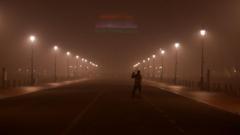
Air pollution in India's capital city, Delhi, has spiraled into a state of crisis, with pollution levels hitting extreme heights on Monday, forcing the city into a choking blanket of smog. According to the monitoring data from IQAir, pollution levels soared to a staggering 1,500 by mid-afternoon IST, 15 times higher than what the World Health Organization (WHO) deems safe for breathing.The hazardous air quality has stalled flight operations and prompted the government to close schools and implement a halt on construction activities within city limits. The grim scenario follows a similar pattern witnessed in Lahore, Pakistan, where alarming pollution levels surpassed 1,000 this month, signifying a regional environmental challenge. Experts predict that the air quality in Delhi could further deteriorate in the coming days, highlighting the necessity for more stringent measures to combat the escalating pollution crisis. The WHO categorizes any air with an Air Quality Index (AQI) over 300 as posing severe health risks, and on Monday morning, the pollution control body of India defined the air quality in the city as "severe plus" after surpassing the 450 mark.In response to the worsening conditions, authorities have implemented a series of rigorous measures, including a ban on non-essential vehicles entering the city and mandating all offices to have 50% of their workforce operating from home. Last week, the government extended a ban on coal and firewood usage, along with restrictions on diesel generators for non-emergency purposes.The annual battle against air pollution for Delhi and its neighboring states typically intensifies each winter from October to January. This seasonal smog arises from a combination of falling temperatures, vehicular emissions, dust, and agricultural stubble burning—a practice that has intensified in regions like Haryana and Uttar Pradesh. Delhi’s Chief Minister, Atishi, decried the unchecked stubble burning as a "medical emergency" affecting all of Northern India. She placed blame on the ruling Bharatiya Janata Party (BJP) for their inaction, while the BJP retaliated by holding the Aam Aadmi Party (AAP) responsible for the city’s pollution woes. As political tensions mount, residents' frustration grows palpable, with social media users expressing their despair about the toxic air.Comments from the local populace reveal the urgency of the situation; many report severe throat irritation and concern for the health of children. Calls for public demonstration against the toxic air reflect the community's growing impatience with governmental inadequacies in addressing the pollution crisis. The worsening air quality serves as a stark reminder of the persistent environmental challenges facing urban centers globally, urging for collaborative action towards sustainable solutions.