In brief
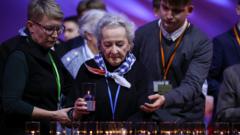
At a solemn gathering in Auschwitz, 56 survivors shared powerful testimonies, urging young generations to recognize the signs of intolerance. Leaders from around the world joined them to honor the millions lost during the Holocaust, highlighting the need for remembrance and action against hatred.
The memories of Auschwitz survivors resonate strongly as the world marks 80 years since the liberation of the infamous extermination camp. During a ceremony attended by world leaders and royals, survivors recounted the atrocities faced at the hands of the Nazis. Leon Weintraub, the oldest survivor present at 99 years old, reflected on the dehumanization experienced by camp victims, stating, "We were stripped of all humanity." Tova Friedman, who was just a child during her ordeal, echoed these sentiments, sharing harrowing memories of witnessing the brutal persecution of her friends and families, underscoring the risk of letting history fade into silence. The solemn gathering, held under a tent that covered the camp's entrance, served as a vital reminder of the dangers posed by antisemitism and intolerance. Survivors urged the younger generation to remain vigilant against societal prejudices, emphasizing that echoes of past evils resonate in present-day challenges. "Be sensitive to all expressions of intolerance," emphasized Weintraub, pinpointing the critical role of youth in safeguarding humanity's shared history.The Auschwitz camp, where over 1.1 million lost their lives, represents one of the deadliest chapters of the Holocaust, and the stories of its survivors are increasingly rare. Speaking at the ceremony, Director of the Auschwitz museum, Piotr Cywinski, emphasized the importance of preserving memory, declaring, "without memory you have no history, no experience, no point of reference."World leaders, including Polish President Andrzej Duda and British King Charles III, paid their respects by laying wreaths at memorials for the victims, with the King describing his visit as a deeply personal pilgrimage filled with emotional reflections on humanity's dark history. In a timely warning, United Nations Secretary-General António Guterres highlighted the rising tide of Holocaust denial and the continued presence of hate across the globe, urging collective remembrance as both a moral duty and a proactive stance against future atrocities.Survivors like Mala Tribich reinforced the significance of education in combating ignorance, reminding attendees of the destructive potential bred in environments hostile to diversity. With the voices of these survivors fading, leaders and communities are challenged to carry forward their messages of remembrance and vigilance against hate, ensuring history does not repeat itself. As International Holocaust Memorial Day is recognized across the globe, the plea for awareness and action against intolerance resonates louder than ever, underscoring a collective responsibility for future generations.