In brief
As saltwater crocodile populations in Australia flourish, the community grapples with their safety and the species' preservation, sparking a lively discussion about responsible coexistence.
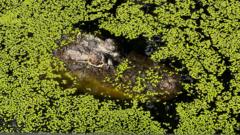
On the dawn-lit waters of Darwin Harbour, within Australia’s Northern Territory (NT), government ranger Kelly Ewin manages the delicate task of capturing saltwater crocodiles, ensuring public safety while honoring the species' dramatic recovery from near extinction. “You get pretty much zero chances with these guys,” Ewin states cautiously as he navigates the floating traps where agitated crocs are ensnared, reflecting the challenging balance between human safety and wildlife preservation. Once nearing extinction with numbers plummeting to about 3,000, the saltwater crocodile population has rebounded since the 1971 hunting ban, now estimated at around 100,000 in NT. This remarkable comeback introduces new complexities for local authorities, particularly the management of crocodile encounters with the growing human population. “The worst thing that can happen is when people turn against crocodiles,” warns Prof. Grahame Webb, an expert in crocodile behavior, emphasizing the importance of maintaining a harmonious relationship as tensions can lead to drastic measures. While NT’s environment serves as an ideal habitat for these cold-blooded predators, awareness programs such as "Be Crocwise," which instruct locals on how to behave responsibly in crocodile territories, contribute to minimizing dangerous interactions. Natasha Hoffman, a ranger coordinating the initiative, underscores the significance of education in keeping communities safe: “We need to ensure that people are aware and prepared.” As management has evolved, a new ten-year crocodile management plan allows for an annual quota increase from 300 to 1,200 crocodiles that can be culled. However, mass culling is not considered viable, reflecting the species' protected status. Instead, Ewin’s team focuses on removing crocodiles that pose an immediate threat, finding a middle ground between preservation and public safety amid occasional tragic encounters. These interactions often reignite heated discussions surrounding crocodile management and human coexistence. Tourism offers potential economic benefits, as the allure of crocodiles attracts visitors and supports local fashion industries that capitalize on crocodile leather. Mick Burns, a prominent farmer, notes that sustainable practices and economic partnerships with Indigenous communities are vital in ensuring a shared benefit system. Indigenous voices like Otto Bulmaniya Campion emphasize the long-standing cultural significance of crocodiles while advocating for their rightful involvement in the recent economic opportunities associated with crocodile farming. Despite the commercial potential, concerns about animal welfare persist, notably regarding captivity practices which can compromise the well-being of these social animals. Local advocates raise questions, highlighting the complexity of the relationship between conservation, traditional practices, and ethical considerations. As Darwin grapples with its identity as a coexistence ground for humans and apex predators, narratives surrounding the crocodile population provoke reflective conversations about wildlife management’s pragmatism in a modern context. “We’ve done what very few people can do,” Webb shares, contemplating the efforts to integrate a formidable predator into the social fabric of Darwin while educating the public on necessary safety measures. The ongoing discussion of crocodile management manifests a greater conversation about responsible stewardship of nature in an increasingly populated world.