In brief
In a dramatic development, Sudan's Rapid Support Forces (R.S.F.) have declared their own government as they lead an aggressive military campaign in Darfur, resulting in the displacement of approximately 400,000 individuals from an already famine-stricken camp. This declaration raises concerns about the potential territorial fragmentation of Sudan during an ongoing civil war.
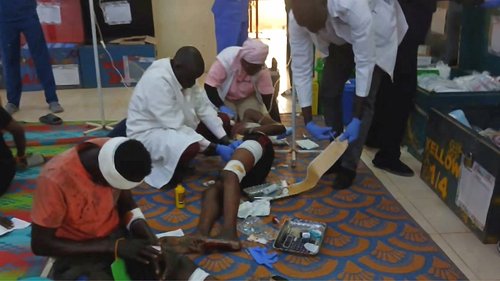
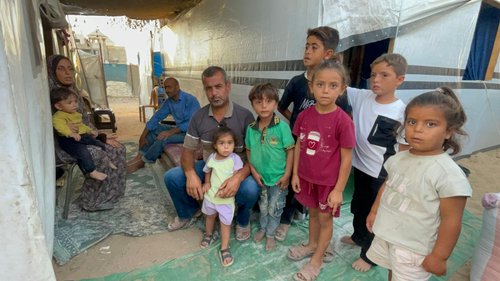
In a drastic escalation of Sudan’s civil war, the Rapid Support Forces (R.S.F.) claimed the establishment of their own parallel government on Wednesday, coinciding with a fierce offensive in western Darfur that has wrought havoc on civilian populations. This announcement signals a worrying trend that could lead to Sudan's territorial division, as the R.S.F. increases its control over vast areas while the Sudanese military maintains power in the northern and eastern regions, including the capital, Khartoum.Reports indicate that during the recent offensive, the R.S.F. targeted the Zamzam camp, an area already suffering from famine, resulting in the death of at least 300 people and displacing an estimated 400,000 others in just a few days. Zamzam camp, which previously housed about half a million residents, has now been almost completely evacuated, leaving a trail of survivors who are dehydrated, malnourished, and traumatized by the brutal conditions they endured.Gen. Mohamed Hamdan, the leader of the R.S.F., characterized his newly formed government as one promoting "peace and unity" that would represent various ethnic groups, mirroring the calls for inclusive governance made by Sudanese pro-democracy activists. However, critics note that such rhetoric contradicts the violent actions of the R.S.F. on the ground.As humanitarian conditions deteriorate, aid agencies report that thousands are arriving in Tawila, a neighboring area, in dire need of assistance. The ongoing conflict poses severe threats not only to the local populace but also to the stability of the broader region, highlighting an urgent need for international intervention and support to avert a further humanitarian disaster.