In brief
Due to technical setbacks with the Starliner spacecraft and the delay in launching a replacement crew, Wilmore and Williams will now remain in orbit until at least late March or possibly April, with NASA confirming the astronauts are safe and well-stocked.
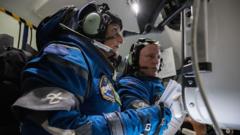
As Butch Wilmore and Suni Williams wait longer to return from their mission aboard the International Space Station, NASA has confirmed that the astronauts' homecoming has been postponed again due to ongoing technical difficulties. Initially expected to return after just eight days, their mission has now been extended until late March or possibly early April 2025.The astronauts had been set to come home following their launch in June, but complications with Boeing's Starliner spacecraft led to a delay in their scheduled return. NASA addressed these concerns, stating the delay poses no risk to Wilmore and Williams, as the ISS has received resupply flights ensuring adequate food, water, oxygen, and holiday provisions.Dr. Simeon Barber, a space expert from the Open University, expressed understanding about the situation, acknowledging that while the astronauts may be disappointed to miss Christmas with their families, the extended stay on the ISS shouldn't pose significant challenges. “I'm sure that they are already disappointed that they were going to miss Christmas back home with the folks. But this is just another two months on an already quite long mission," he explained.Currently, the next crew's launch has been pushed back by over a month, as the new capsule designed to transport them is not scheduled to be flight-ready before late March. NASA considered employing another SpaceX capsule for the crew’s transfer to maintain the flight schedule. However, the decision was made to wait for the new capsule, ensuring the safety and efficiency of operations.With space missions commonly lasting six months, the additional wait for Wilmore and Williams can be managed comfortably as the scientific work on the ISS continues, highlighting the importance of adaptability in space exploration.