In brief
The Rail Baltica project, a high-speed rail initiative, carries significant economic implications and enhances regional security against the backdrop of Russian aggression.
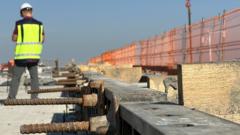
The Rail Baltica project, a historic and ambitious railway initiative, is witnessing escalating urgency among the Baltic states of Estonia, Latvia, and Lithuania. Initially envisioned as a high-speed link stretching 870 kilometers (540 miles) across these nations, it is now deemed a critical asset amid increasing concerns regarding Russian military aggression following the invasion of Ukraine.In the wake of Russia's actions, the Baltic nations view the completion of Rail Baltica as essential for establishing a direct railway connection to Poland, thereby shortening travel times and promoting economic and natural advantages. Currently hindered by the existing Soviet-era railway infrastructure, the Baltic states require speedy advancement of Rail Baltica. Estonia's Infrastructure Minister Vladimir Svet emphasized the project's importance, highlighting the need for a robust connection to Europe, especially in light of historical memories of Soviet occupation and the contemporary threat posed by Russia.The Russian enclave of Kaliningrad shares borders with Lithuania and Poland, underscoring the proximity of potential military action. Currently, NATO has deployed approximately 10,000 troops to the region, a figure that could escalate dramatically should circumstances worsen. As such, the railway will enhance military mobility, expediting movements between member nations, including a connection from the Netherlands to Tallinn.At the core of Rail Baltica’s development is the Ülemiste passenger terminal located near Estonia's capital, Tallinn. Workers are tirelessly constructing this northernmost point of the railway, which aims to transition to the European railway system for seamless travel. The new railway will facilitate train speeds of up to 250 km/h (155 mph), a stark contrast to the current logistics requiring passengers to switch trains at the Polish border. This transition promises to significantly reduce travel times, eliminating hours off journeys, such as from Tallinn to Vilnius, which currently exceeds 12 hours. With estimated economic benefits that could collectively amount to €6.6 billion, the overarching ambitions for Rail Baltica appear promising. Yet, challenges remain, primarily around surging costs that have skyrocketed fourfold since the project’s inception in 2017, totaling an estimated €24 billion.Despite EU funding covering a substantial portion of costs, recent delays and rising expenses have caused friction among the Baltic states. Individual state regulations have made project alignment challenging, prompting the decision to divide it into two phases. Phase one focuses on the most crucial railway stops, with plans for a single track slated for completion by 2030. Discussions are intensifying around potential cost-cutting measures or exploring loans to fund the project amidst persistent delays.Awaiting the completion of Rail Baltica, Baltic nations face crucial decisions about their cultural preservation and justified security within a firm European Union and NATO framework. For these countries, the stakes are higher than mere transportation—Rail Baltica represents a path to not only economic growth but also enduring freedom and security in a landscape shaped by seismic geopolitical shifts.