In brief
Amidst a backdrop of educational bans imposed by the Taliban, Afghan women and girls have turned to carpet weaving, a rare profession open to them, as they strive to support their families and maintain their dreams.
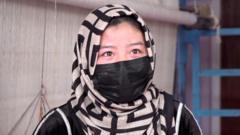
In Kabul, where the scent of wool and dyes fills the air, dozens of women and girls grapple with the realities of life under Taliban rule. With educational opportunities curtailed for females over the age of 12 since 2021, many young women like 19-year-old Salehe Hassani have been forced to seek work in the labor-intensive carpet weaving industry. "We girls no longer have the chance to study," she reflects, her voice tinged with resignation yet infused with determination.The carpet weaving trade has become one of the few avenues available to women seeking to earn a living, despite the grim economic climate. According to the UN, nearly 90% of the carpet industry's workforce consists of women, with an estimated 1.2 to 1.5 million Afghans depending on this trade for their livelihoods. Although the industry's exports have surged, profits rarely reach the hands of the weavers, many of whom earn around $27 for a square meter of carpet that can take up to a month to produce—a stark contrast to the higher prices carpets fetch abroad.Nisar Ahmad Hassieni, who oversees 600 female workers across three workshops, emphasizes the mission of his organization to uplift those impacted by the educational bans. He argues that the Taliban's promises of reopening schools remain unfulfilled, citing ongoing concerns about reconciling the education system with "Islamic values". Shakila, 22, who once aspired to become a lawyer, has succumbed to managing her family's carpet weaving operations after her father's decision to withdraw them from school for safety reasons following tragic bombings that claimed the lives of many young girls. Her sister, Samira, yearns to return to journalism, her ambitions stifled by the barriers imposed on women's education.Despite the challenges and low compensation, the spirit of some young women remains unbroken. Salehe has dedicated herself to pursuing an education in English during her off-hours, while nurturing dreams of becoming a doctor. As they weave intricate patterns into the fabric of their lives, these girls embody resilience and hope, illustrating a steadfast commitment to education and self-improvement—no matter the obstacles.