In brief
The private spacecraft Blue Ghost has made history by landing on the Moon, making it the second commercial vehicle to reach the lunar surface. With plans to further explore the Sea of Crises, this successful mission signifies a shift in space exploration towards private enterprises, paving the way for future lunar and beyond endeavors.
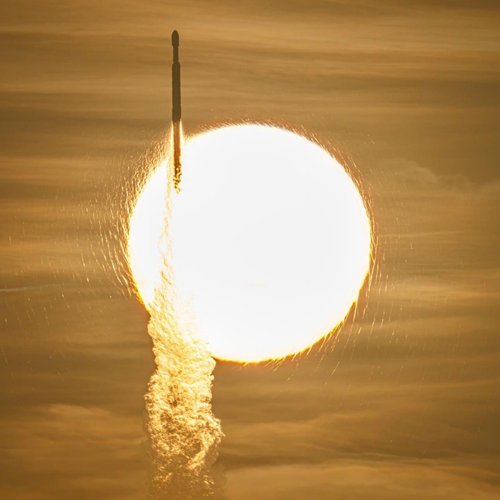
A private spacecraft named Blue Ghost has successfully touched down on the Moon, becoming only the second commercial vehicle to reach the lunar surface. Launched by US company Firefly Aerospace on January 15, the mission aimed to explore the Sea of Crises, a massive crater visible from Earth. This endeavor represents a new collaboration between NASA and private aerospace companies, ushering in a fresh chapter in lunar exploration. Another firm, Intuitive Machines, is set to follow suit with its Athena spacecraft, which is expected to land near the Moon's south pole soon. Intuitive had previously become the first private company to achieve a lunar landing with its Odysseus spacecraft on February 22 last year, but that mission was short-lived due to a mishap during landing.Blue Ghost, unlike its predecessor, executed a smooth landing after two weeks of orbiting the Moon. Excitement erupted at Firefly's headquarters in Texas as team members celebrated the successful achievement. Dr. Simeon Barber, a planetary science researcher at Open University, emphasized that Blue Ghost represents "the first successful private venture" on the Moon, as it landed intact and operational.According to Dr. Barber, private enterprises are particularly focused on the Moon for its potential as a launch pad for deeper space exploration. The Moon presents a challenging environment that can help refine robotic technologies necessary for future missions. He predicts that humans will eventually return to the Moon, a prospect currently hampered by funding issues since the last manned mission in December 1972.Reflecting on the Apollo missions, Dr. Barber noted that they were costly, leading to limited manned presence on the lunar surface. The introduction of commercial startups into space endeavors could foster competition that lowers costs, potentially leading to innovative solutions for resource extraction on the Moon, such as capturing water for astronauts.Astrobotic Technology was another early contender in the private lunar mission race, but its attempt in January 2024 ended in failure when a fuel leak caused its lander to crash back to Earth, marking a stark reminder of the challenges that still lie ahead.As Blue Ghost's successful mission unfolds, it signifies a broader trend toward a new era in space travel, where private companies play an increasingly pivotal role in the exploration of the final frontier.