In brief
Residents express worries about local industries' role in the alarming water color change.
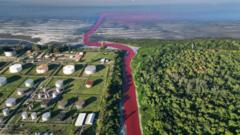
A suburb of Buenos Aires has become the focal point of environmental anxiety after a canal running through the area turned a startling shade of bright red on Thursday. The Sarandí canal, which flows into the Rio de la Plata and borders an ecological reserve, sparked alarm among residents who captured the bizarre spectacle in photos and videos.Local media speculate that this surprising color change may be attributed to the disposal of textile dyes or chemical waste from a nearby depot. The Argentine Environment Ministry has reported that it is conducting tests on water samples taken from the canal to unveil the cause behind the striking transformation.By the end of the afternoon, the water's hue had lessened, according to reports from the AFP news agency. However, the incident has reignited concerns among the community, led by long-standing accusations that nearby factories, particularly in leather processing and textiles, are dumping harmful waste into the waterway—located roughly 10 kilometers from downtown Buenos Aires.Residents have shared their alarming experiences with the canal's varied colors over time. Silvia, one concerned local, reported, "Although it has turned red now, at other times it was yellow, and the acidic smell made us sick even in the throat." Another resident, Maria Ducomls, reinforced the issue, mentioning that she has witnessed multiple color variations, including bluish, green, pink, and lilac, often accompanied by a greasy layer on the surface. As residents of this beleaguered area voice their frustrations, the potential risks to public health and local ecosystems remain a pressing concern that demands urgent attention.