In brief
In a contentious decision, Argentina's Congress has passed an amendment that loosens restrictions on mining in glacier areas, weakening protections established by the original Glacier Law of 2010. While proponents argue it empowers provinces regarding resource utilization, opponents warn that this reform jeopardizes vital water sources amid growing climate challenges. Protests have erupted from environmentalists and concerned citizens advocating for conservation.
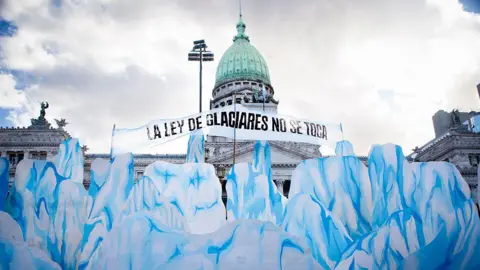
Argentina's Congress has passed a controversial amendment making it easier to mine in glacier regions, a move environmentalists say weakens protections for crucial water sources. The pioneering Glacier Law, approved in 2010, prohibited all mining and exploration activities in glacier regions by protecting them as water reserves. The reform shifts the responsibility of defining protected glacier areas from the Argentine Institute for Snow, Ice and Environmental Sciences (Ianigla) to the provincial governments.President Javier Milei, who backed the reform, said the change empower[s] the provinces to utilise their resources and allows mining activities where there was nothing to protect.Argentina's Senate had already approved the bill in February 2026, so approval by the lower house was the last major hurdle left. Opponents of the reform argued that it would put a fundamental resource - water - at risk. Without water, we can't even think about a growth and development project, Congresswoman Natalia de la Sota said. However, a backer of the bill, Congresswoman Nancy Picón Martínez, defended the mining sector, stating, This law protects glaciers, no matter how much some people want us to believe otherwise.Following the reform, glaciers and periglacial environments will be protected by the national Ianigla inventory until provincial leaders prove they do not serve as strategic water reserves. Argentina has over 16,968 glaciers, which provide critical water to 36 river basins across 12 provinces, impacting the lives of seven million people. Water from melted glaciers assists in mitigating drought, particularly in regions vulnerable to climate change like Mendoza. Yet Greenpeace and other environmental advocates have criticized the bill, stating that all glaciers and periglacial environments function as essential freshwater reservoirs.