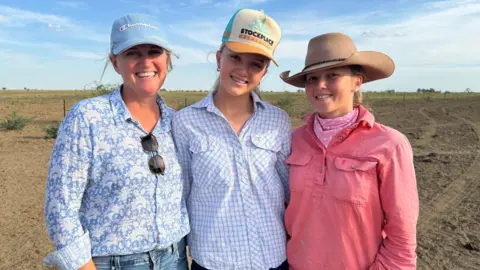
With school out for summer, 15-year-old Breanna Easton finds herself cut off from social media due to Australia's recent ban on under-16s engaging online. Living 1,600km from Brisbane in Queensland's outback, Breanna has relied on platforms like Snapchat and TikTok to connect with friends spread out across vast distances. The ban, effective from late November after a year-long debate, aims to protect young Australians from the potential dangers of social media, such as bullying and exposure to harmful content.
Opponents argue that the ban restricts young people's means of communication, alienating them from their peers and leading them towards less regulated areas of the internet. Breanna’s mother, Megan, feels the legislation oversteps parental guidance, suggesting that shielding children entirely from social media could hinder their ability to learn about responsible online behavior.
Reactions from other youths add depth to this dialogue. Some, like 14-year-old Jacinta Hickey from Sydney, see the ban as an insult to their maturity, while others, like 12-year-old Lola Farrugia, find the policy a relief, remarking on the potential dangers of social media. The law has also sparked concerns from minority groups, especially LGBTQ+ and autistic youth, who rely heavily on digital platforms for community and support.
Premier Peter Malinauskas initiated the ban after discussions around the adverse effects of social media on youth mental health, stating that protecting children is of utmost importance. Meanwhile, advocates emphasize that a one-size-fits-all approach may inadvertently harm the very demographic it aims to protect. As reactions remain divided, young Australians find themselves at a crossroads between the need for protection and the fundamental desire to connect.
Opponents argue that the ban restricts young people's means of communication, alienating them from their peers and leading them towards less regulated areas of the internet. Breanna’s mother, Megan, feels the legislation oversteps parental guidance, suggesting that shielding children entirely from social media could hinder their ability to learn about responsible online behavior.
Reactions from other youths add depth to this dialogue. Some, like 14-year-old Jacinta Hickey from Sydney, see the ban as an insult to their maturity, while others, like 12-year-old Lola Farrugia, find the policy a relief, remarking on the potential dangers of social media. The law has also sparked concerns from minority groups, especially LGBTQ+ and autistic youth, who rely heavily on digital platforms for community and support.
Premier Peter Malinauskas initiated the ban after discussions around the adverse effects of social media on youth mental health, stating that protecting children is of utmost importance. Meanwhile, advocates emphasize that a one-size-fits-all approach may inadvertently harm the very demographic it aims to protect. As reactions remain divided, young Australians find themselves at a crossroads between the need for protection and the fundamental desire to connect.