In brief
Bolivia has agreed to a $20 million partnership with the United States to boost drug‑trafficking enforcement, marking a thaw after 18 years of estrangement and pulling it into the US‑led Shield of the Americas. The accord, while said to strengthen security institutions, strikes at the heart of Quechua and Aymara traditions that rely on coca for medicine, rituals and food, and threatens their land rights and stewardship of Andean ecosystems. Indigenous leaders fear that intensified militarisation and eradication campaigns will erode customary governance, damage native biodiversity and undermine cultural continuity. The partnership sits at a crossroads between national security goals and the preservation of indigenous sovereignty and environmental balance.
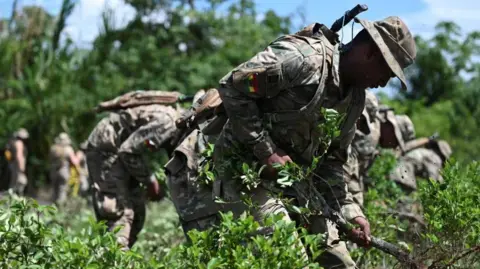
In the first week of June, Bolivia announced a $20 million partnership with the United States to strengthen its narcotics‑enforcement capabilities. The deal includes training and equipment for Bolivian security forces, a move signalling a rebalance after two decades of estrangement from Washington.
For the Quechua and Aymara peoples whose livelihoods have long been tied to the cultivation of coca—a plant used in traditional medicine, rituals and as a staple food—this shift raises urgent questions about land sovereignty and cultural continuity.
Historically, the government’s “coca‑era” policies ended the 17‑year absence of U.S. DEA cooperation, but the new agreement aligns Bolivia with the U.S. “Shield of the Americas” security front. Indigenous communities have spoken out that extensive coca eradication programs threaten their ancestral territories and the ecological balance of the high‑land valleys.
Environmental experts warn that intensified militarisation may accelerate deforestation of Andean cloud forests, jeopardising water sources and the biodiversity that sustains native medicinal plant assemblages.
Meanwhile, over a hundred indigenous leaders and civil‑society groups in La Paz demanded that the partnership be signed only after a consultative process with communities directly affected by coca cultivation. They fear that the plan might be used as an excuse to intrude on customary land rights and impose external security protocols that disregard local governance structures.
The Bolivian foreign ministry has said its goal is to “strengthen institutions tasked with public security and the fight against organised crime.” Yet the first deadline for the programme is a bold pledge to convert coca fields—a traditional staple—into avenues for illicit drug trafficking, a transformation the indigenous sector has resisted for years.