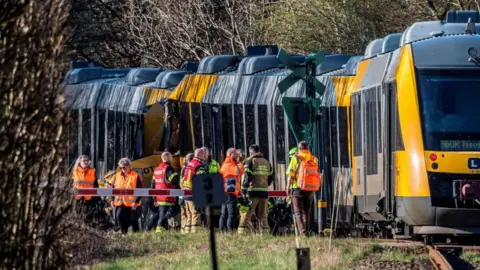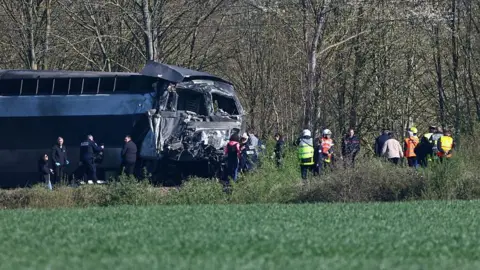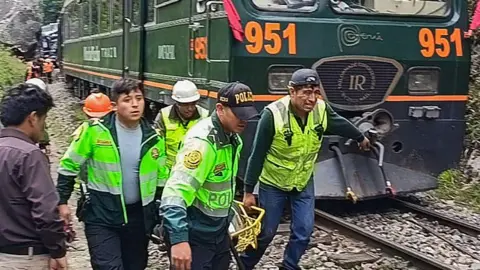
A passenger has described chaos after two trains collided head-on near Peru's most popular tourist attraction, Machu Picchu.
Niels Honkoop, 33, told the BBC he had switched seats part-way through the journey from the middle of the train to the back, before it crashed, injuring many of those sitting near the front.
I saw staff running around and people crying and people on the floor and chaos erupted, he said. We got off the train and I saw people bleeding with very severe injuries.
A train driver was killed and at least 40 others were injured in the crash, which took place at around 13:20 local time (18:20 GMT) on Tuesday.
Mr. Honkoop noted the table in front of him broke in two, and shattered glass littered the floor of the carriage, with many passengers lying wounded in the aisle. One woman was seen trapped between a bench and a table.
He attempted to assist by moving luggage and handing out painkillers, having just had a wisdom tooth removed which left him with an ample supply of medication.
The UK Foreign Office reported they are supporting a number of British nationals involved in the crash, while the US embassy confirmed that American citizens sustained injuries.
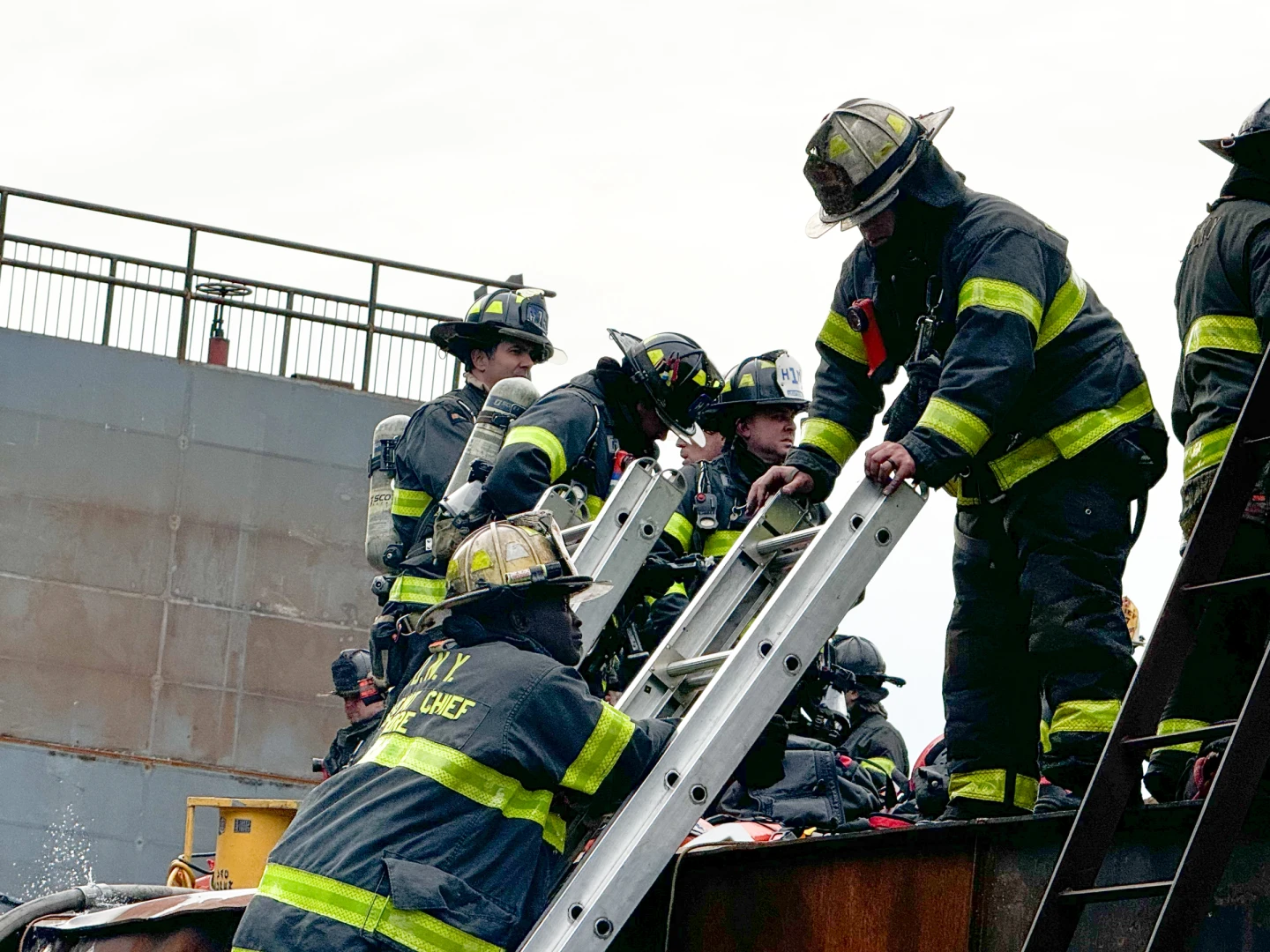
Rescue workers arrived quickly to provide medical assistance, and Mr. Honkoop’s group was taken to a nearby village for food and care before being relocated to a hotel.
The collision occurred on the track linking Ollantaytambo Station and Aguas Calientes, the town closest to Machu Picchu. Train rides usually take around 90 minutes.
PeruRail and Inca Rail operated the trains involved in the accident. Despite the immediate response from staff, which included first aid for the injured, the cause of the accident remains unclear.
This incident surfaces amidst ongoing transportation disputes in the region, particularly regarding local community dissatisfaction with the management of tourist access to the UNESCO World Heritage Site.
As an ancient Incan city built in the 15th Century, Machu Picchu remains one of the Seven Modern Wonders of the World, with various transport options for visitors, including train and bus services, or treks along the Inca trail.
Concerns over over-tourism persist, especially since a daily cap on visitors was implemented in 2011 to protect the site.