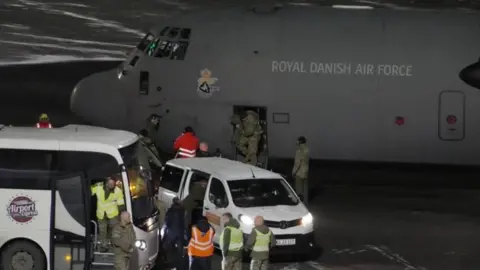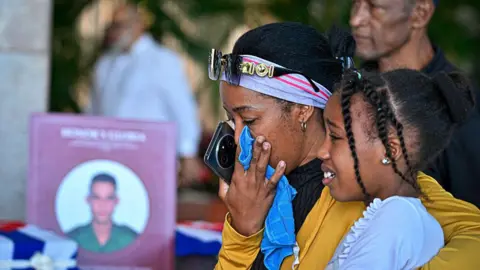
Cuban leaders, including Raul Castro and President Miguel Diaz-Canel, gathered at Havana's airport to honor the remains of 32 fallen soldiers killed in Venezuela. The soldiers' deaths represent a significant blow to Cuba, being the highest military loss faced at the hands of the U.S. since the Bay of Pigs invasion of 1961. Military and civilian crowds paid respects as the funeral procession passed, demonstrating national pride amidst sorrow.
The elite U.S. Delta Force was implicated in the operation, with Cuban officials acknowledging the presence of their military and intelligence personnel integrated within the Venezuelan government. These losses force the Cuban government to confront uncomfortable truths about their intelligence-sharing alliances.
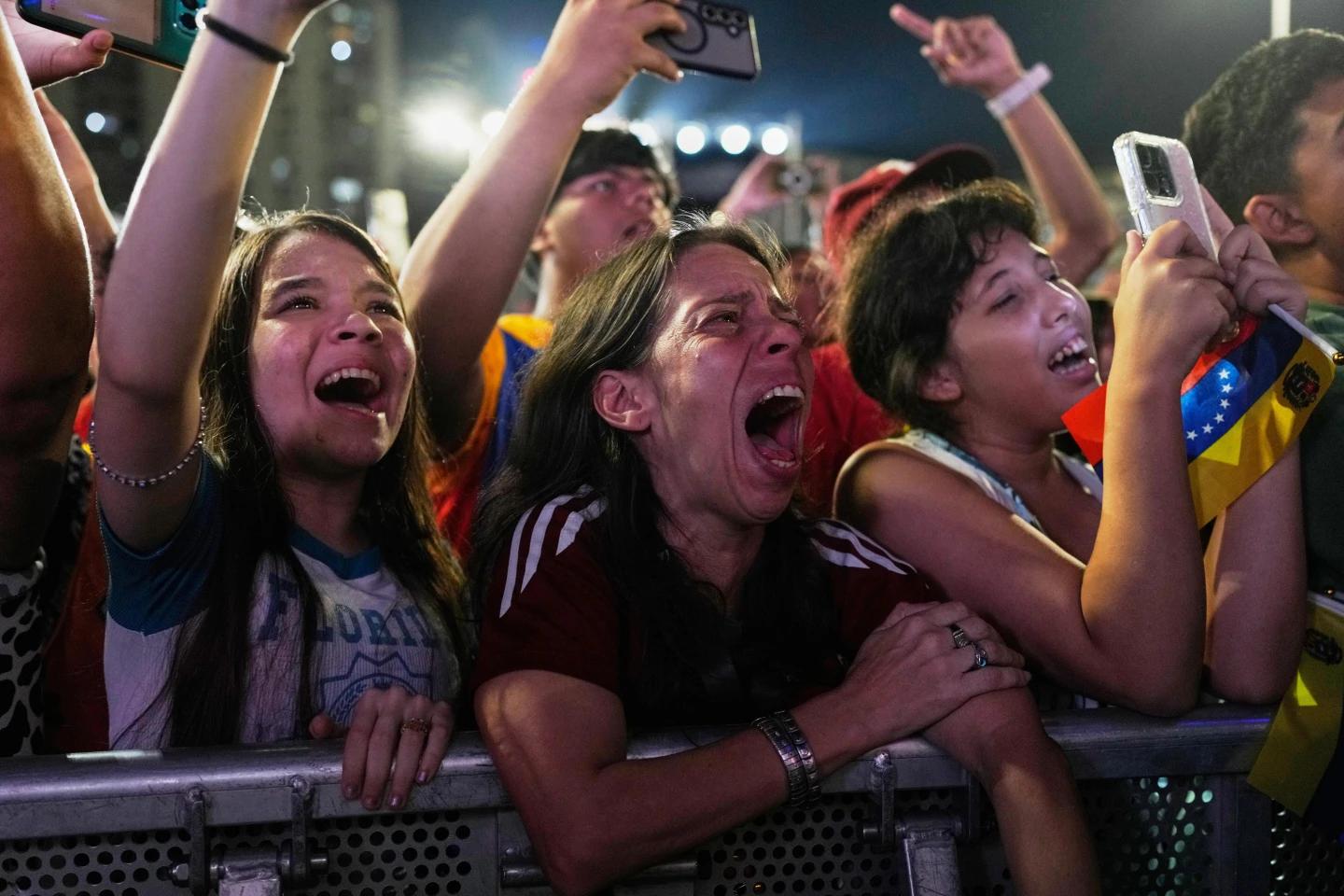
For grieving families in Cuba, the emotional toll of the conflict is compounded by the country's precarious economic situation, worsened by U.S. sanctions and management issues. With Venezuela's support in jeopardy, concerns rise about the stability of Cuba's own political structure.
Amid these tensions, Victor Dreke, an influential figure from the Cuban Revolution, expresses steadfast resistance against perceived U.S. aggression and reassures that Cuba is prepared to defend its sovereignty. As U.S.-Venezuela relations appear to be normalizing following the attack, the future of Cuba's revolutionary ideals remains uncertain.
Cuba now stands on a precipice facing a challenging landscape, reeling from this tragedy while grappling with the potential fallout from changing political dynamics.