In brief
Dolores Huerta, a formidable figure in the labor movement and a champion for civil rights, has made a shocking revelation regarding her past with César Chavez, co-founder of the United Farm Workers. At nearly 96, Huerta reflects on her life's work to empower underserved populations and calls for recognition of women's voices in social justice movements.
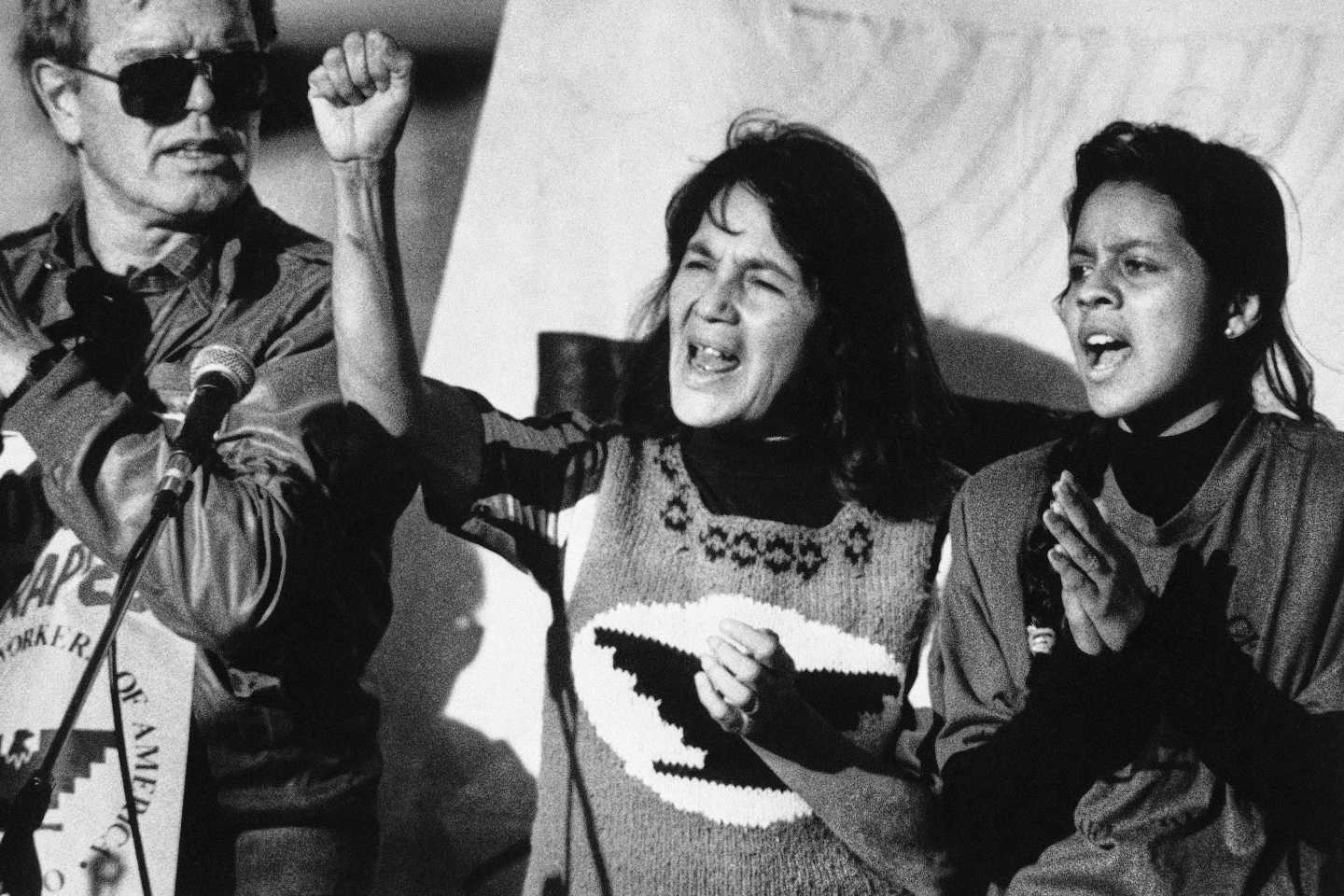
ALBUQUERQUE, N.M. — Dolores Huerta, the co-founder of the United Farm Workers union and renowned civil rights icon, has lived a life marked by resilience and activism. Known for her iconic slogan 'Si, se puede' ('Yes, it can be done'), which she coined in 1972, Huerta has been an essential figure in advocating for better conditions and rights for farmworkers.
Recently, Huerta made the powerful decision to reveal her history of sexual abuse by César Chavez, the very leader she worked alongside to fight for the rights of marginalized communities. This revelation not only shocked the public but also reignited discussions about the complex legacy of Chavez and the importance of women’s voices in movements for social justice.
Born in 1930 in New Mexico, Huerta's early years were shaped by her father's activism as a miner and lawmaker. After her family relocated to California, she became acutely aware of the pressing needs of farmworker families as she began her teaching career. This awareness prompted her to turn her focus to organizing labor rather than simply educating children who were often hungry and neglected.
In the 1960s, she partnered with Chavez to establish the National Farm Workers Association, which later became the United Farm Workers. Huerta’s relentless pursuit of fair wages and better working conditions has led her to face incarceration over 20 times while advocating for workers’ rights.
Even at nearly 96, Huerta continues to stand at the forefront of advocacy for underserved communities, recently stating, 'I channel everything I had into advocating on behalf of millions of farm workers and others who were suffering and deserved equal rights.'
Additionally, her tireless work has earned her recognition, including the Presidential Medal of Freedom. As calls arise for changing the names of public spaces bearing Chavez's name to honor Huerta instead, her commitment to justice and empowerment remains unwavering. With a stronger focus on amplifying women's voices, Huerta’s legacy inspires future generations to speak out against injustice.
As conversations surrounding Huerta and Chavez gain momentum, her courage serves as a beacon of hope, emphasizing the need for inclusive dialogues about the past and forging paths for equity and respect in the future.