In brief
In the wake of US Vice President JD Vance's controversial speech last year at the Munich Security Conference, European leaders are grappling with strained relations with the US. With Trump's administration's aggressive foreign policy changes, including demands for European countries to bolster their own defenses and a looming crisis over Greenland, the upcoming conference is set to redefine transatlantic security ties amid ongoing conflicts in Ukraine and Russia's military ambitions.
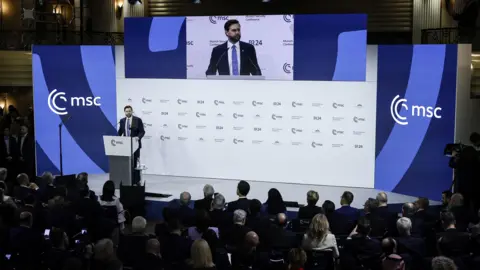
It is one year since US Vice-President JD Vance delivered a bombshell speech at the Munich Security Conference, castigating Europe for its policies on migration and free speech, and claiming the greatest threat the continent faces comes from within. The audience were visibly stunned. Since then, the Trump White House has tipped the world order upside down. Allies and foes alike have been slapped with punitive tariffs, there was the extraordinarily brazen raid on Venezuela, Washington's uneven pursuit of peace in Ukraine on terms favourable to Moscow and a bizarre demand that Canada should become the 51st state of the US. This year, the conference - which begins later this week - looks set to be decisive. US Secretary of State and National Security Adviser Marco Rubio leads the US delegation, while more than 50 other world leaders have been invited. It comes as the security of Europe looks increasingly precarious. The latest US National Security Strategy (NSS) published late last year, called on Europe to stand on its own feet and take primary responsibility for its own defence, adding to fears that the US is increasingly unwilling to underpin Europe's defence. But it is the crisis over Greenland that has really tugged at the fabric of the entire transatlantic alliance. Donald Trump has said on numerous occasions that he needs to own Greenland for the sake of US and global security, and for a while he did not rule out the use of force. Greenland is a self-governing territory belonging to the Kingdom of Denmark, so it was hardly surprising when Denmark's prime minister said that a hostile US military takeover would spell the end of the Nato alliance that has underpinned Europe's security for the past 77 years. The Greenland crisis has been averted for now – the White House has been distracted by other priorities – but it leaves an uncomfortable question hanging over the Munich Security Conference: Are Europe-US security ties damaged beyond repair? They have changed, there's no question about that, but they have not disintegrated. Sir Alex Younger, who was chief of the UK's Secret Intelligence Service, MI6, from 2014-2020, tells the BBC that while the transatlantic alliance is not going to go back to the way it was, it isn't broken. This split in security ties is echoed in broader geopolitical tensions and the different perspectives on issues such as trade, migration, and democratic values. As the Munich Security Conference unfolds, the underlying challenges in the transatlantic alliance raise pressing questions about how to navigate the future of international security amidst growing geopolitical uncertainties.