In brief
Following a significant election victory where the Liberal Democratic Party (LDP) secured a two-thirds majority, Japanese stocks, particularly the Nikkei 225, surged to historic heights. Prime Minister Sanae Takaichi's leadership marks a pivotal moment as she embarks on ambitious economic reforms to stimulate growth amidst rising living costs.
Japanese stocks surged to a record high on Monday, as Prime Minister Sanae Takaichi's Liberal Democratic Party (LDP) basked in a historic election victory.
The LDP secured 316 out of 465 seats in Sunday's election, the first time a single party has won a two-thirds lower house majority since Japan's parliament was established in its current form in 1947.
The Japan Innovation Party, the LDP's coalition partner, won in 36 more constituencies, taking their combined total to 352 seats.
The resounding mandate is a gamble that paid off for Takaichi, who now faces the challenge of reviving Japan's moribund economy and tackling cost-of-living woes.
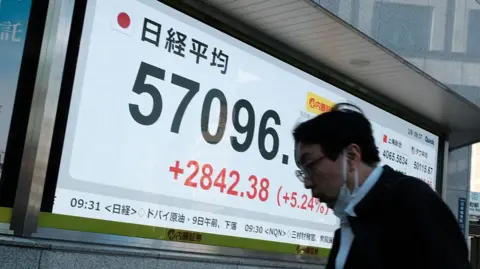
The Nikkei 225 index rallied by more than 5% in early trade on Monday, briefly crossing the 57,000 mark for the first time. It then gave up some gains, but still closed up 3.9% at a record high of 56,363.94.
The LDP's decisive win will help Takaichi advance her pro-business policies without having to negotiate extensively with opposition parties.
Takaichi told reporters on Sunday that she would pursue a responsible yet aggressive fiscal policy and would not reshuffle the Cabinet, which was formed less than four months ago.
Japan's first female prime minister called the snap election last month, just a few months after taking office in October. Her success is in marked contrast to her two predecessors, under whom the party lost its parliamentary majority, battled corruption scandals and struggled to curb rising costs.
Markets commentators say Takaichi's policies could boost the Japanese economy.
The election outcome and upcoming moves like stimulus, tax tweaks, and deregulation will be additional fuel for an existing bull trend, investment analyst Yuka Marosek told the BBC.
Chris Scicluna, head of research at Daiwa Capital Markets Europe, noted that Japanese stock investors had long been believers in Takaichi and were hopeful for an end to austerity and increased investments in growth sectors.
However, he added that investors in Japanese government bonds and the yen were a lot more agnostic if not downright sceptical about Takaichi's intentions, especially given Japan's extremely high debt levels.
Historically low inflation has made Japan sensitive to rising costs, leading voters to express concerns over increasing grocery and rent prices during the election.
The challenge remains for Takaichi to manage an ageing population's social care costs alongside these economic reforms, while critics caution that her plans could deepen instability.
US President Donald Trump congratulated Takaichi on her victory, highlighting the importance of Japan's engagement with global partners.