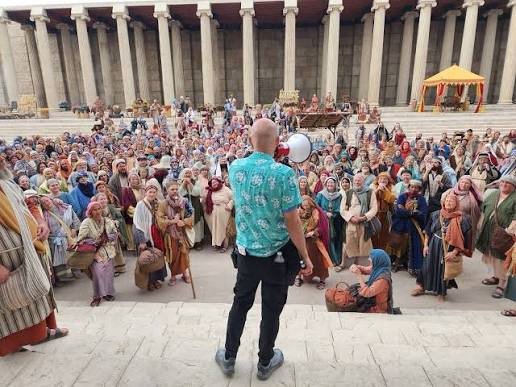
Hollywood loves to sell movie magic. What it hides is the labor that makes it possible. Behind crowd shots, city streets, and packed concert scenes are background actors working brutal days, often under pay structures that collapse once shoots run long.
This isn’t a glitch.
It’s the model.
THE 14-HOUR DAY EVERYONE PRETENDS DOESN’T EXIST
On paper, background actors are protected. SAG-AFTRA defines an eight-hour day with overtime after that. In practice, 12- to 14-hour days are routine, especially on large studio and streaming productions.
Actors spend hours standing, waiting, holding, and resetting. Much of that time is controlled by production, yet rarely explained clearly on vouchers. Questioning hours or conditions risks being quietly removed from future calls.
Long days aren’t exceptional. They’re expected.
HOW PAY FALLS APART AFTER THE FIRST 8 HOURS
Background performers are typically paid a flat day rate, not an hourly wage. That rate assumes a ‘standard’ day that rarely exists. When shoots stretch deep into overtime, the math becomes opaque — especially for newer actors unfamiliar with meal penalties, overtime stacking, or wage statement errors.
In non-union or misclassified situations, performers have alleged that their effective hourly pay drops below minimum wage once unpaid waiting time, deductions, or commissions are factored in.
That claim isn’t hypothetical. It’s been tested in court.
THE LAWSUITS HOLLYWOOD DOESN’T ADVERTISE
Central Casting, the largest background casting company in the industry, faced a class-action lawsuit alleging that commissions pushed non-union extras below California’s minimum wage, resulting in over $1 million in reimbursements. Backstage
Background actors have also filed lawsuits against Amazon Studios and Apple Studios, alleging unpaid overtime, missed meal breaks, and inaccurate wage statements on major productions. Top Class Actions
Parking production assistants — another invisible layer of set labor — have won multi-million-dollar settlements against major networks over unpaid overtime, exposing a broader pattern across Hollywood’s below-the-line workforce. Los Angeles Times
Different jobs. Same playbook.
MEAL BREAKS, PENALTIES, AND SILENCE AS POLICY
California law requires meal breaks. When productions miss them, penalty pay is owed. On fast-moving sets, missed meals are common. Penalty pay is not.
Background actors routinely report confusion, underpayment, or pressure not to ask questions. Speaking up risks being labeled 'difficult,' a quiet career killer in an industry built on reputation and replaceability.
Compliance exists on paper. Enforcement depends on silence.
WHY THIS SYSTEM KEEPS WORKING
Background actors are plentiful, interchangeable, and invisible to audiences. That makes them ideal shock absorbers for budget pressure and schedule creep.
If one actor walks, another is waiting.
If someone complains, the call list moves on.
Hollywood doesn’t need background actors to thrive. It needs them desperate enough to endure.
THE UNION REALITY NOBODY LIKES TO SAY OUT LOUD
Union rules exist, but leverage does not. Tens of thousands of SAG-eligible actors earn less than $7,000 a year from acting work, making it harder to challenge conditions, walk away from exploitative days, or risk missing future calls.
THE COST OF STAYING IN THE FRAME
Background actors are told they’re lucky to be there. That framing hides the truth: many are trained performers subsidizing the industry with exhaustion, unpaid hours, and silence.
They stand for hours.
They wait overnight.
They repeat actions until their bodies give out.
They go home unnamed and unseen.
And the cameras keep rolling.
WHY THIS MATTERS
Hollywood insists exploitation only happens at the top. The truth is easier to hide lower down, where labor is cheap and faces blur together.
The glamour doesn’t disappear.
It just moves out of frame.