The far-right Alternative für Deutschland (AfD) party is riding high in the opinion polls in the eastern German state of Saxony-Anhalt and could win an outright majority in regional elections there in September. It would be the first time a far-right party has held power in a German state since the Second World War. This weekend, the AfD officially adopted what has been described as a 'radical' and pro-ethnic German government programme for Saxony-Anhalt at a party conference in Magdeburg.
The AfD's leading candidate in the state, Ulrich Siegmund, a popular TikTok star, expressed that this was a historic moment for not just Saxony-Anhalt but for Germany as a whole, claiming that the 'whole of Germany' is indeed watching the election closely. He stated that the party's platform reflects a need to address the issues Germans face today, including feelings of insecurity and a perceived loss of cultural identity.
The manifesto, which is over 150 pages long, proposes stringent measures to overhaul Saxony-Anhalt's policies, including a crackdown on immigration and support for large families of ethnic Germans. It also openly contradicts the existing federal policies by advocating for improved relations with Russia amidst the ongoing conflict in Ukraine while calling for sanctions against Russia to be lifted.
Among its proposals, the AfD suggests 'consistent deportations' of immigrants and the provision of free childcare for German families. Some aspects of the plan, however, are seen as impractical at the state level, requiring federal action. Critics, including members of the left-wing Linke Party, have slammed the manifesto as a 'nightmare scenario,' fearing a potential authoritarian shift in governance.
Notably, in the wider context of German politics, the AfD has been classified as a far-right extremist organization by the Office for the Protection of the Constitution. Recent polling indicates the AfD's popularity is troubling, as it came second in the 2022 federal elections, securing a record number of seats.
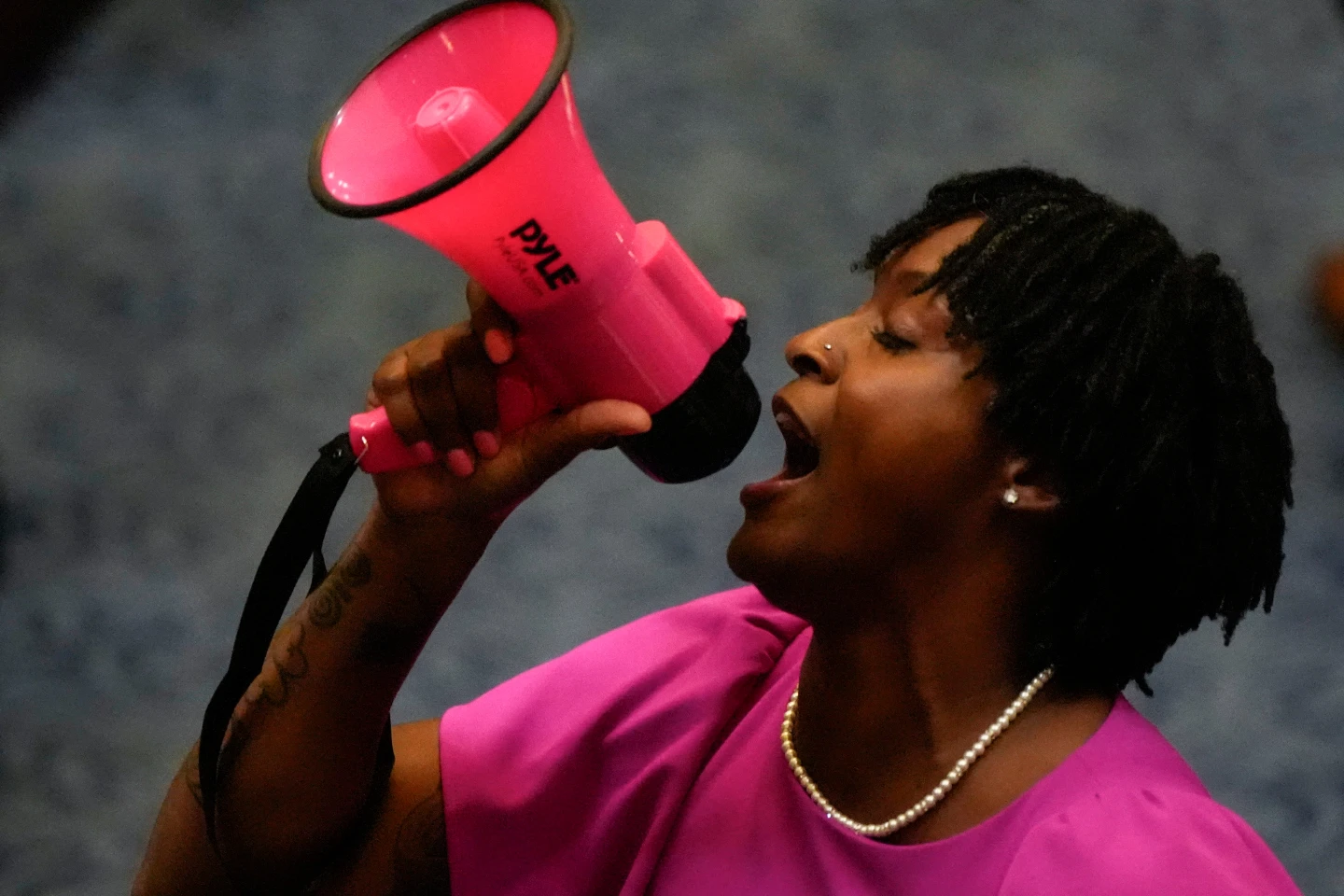
As protests against the party's conference gathered momentum outside, the AfD's controversial use of the term 'remigration,' which refers to the mass deportation of individuals with non-German backgrounds, has ignited further debate and concern regarding the party's future agenda and its implications for democracy in Germany.
The AfD's leading candidate in the state, Ulrich Siegmund, a popular TikTok star, expressed that this was a historic moment for not just Saxony-Anhalt but for Germany as a whole, claiming that the 'whole of Germany' is indeed watching the election closely. He stated that the party's platform reflects a need to address the issues Germans face today, including feelings of insecurity and a perceived loss of cultural identity.
The manifesto, which is over 150 pages long, proposes stringent measures to overhaul Saxony-Anhalt's policies, including a crackdown on immigration and support for large families of ethnic Germans. It also openly contradicts the existing federal policies by advocating for improved relations with Russia amidst the ongoing conflict in Ukraine while calling for sanctions against Russia to be lifted.
Among its proposals, the AfD suggests 'consistent deportations' of immigrants and the provision of free childcare for German families. Some aspects of the plan, however, are seen as impractical at the state level, requiring federal action. Critics, including members of the left-wing Linke Party, have slammed the manifesto as a 'nightmare scenario,' fearing a potential authoritarian shift in governance.
Notably, in the wider context of German politics, the AfD has been classified as a far-right extremist organization by the Office for the Protection of the Constitution. Recent polling indicates the AfD's popularity is troubling, as it came second in the 2022 federal elections, securing a record number of seats.
As protests against the party's conference gathered momentum outside, the AfD's controversial use of the term 'remigration,' which refers to the mass deportation of individuals with non-German backgrounds, has ignited further debate and concern regarding the party's future agenda and its implications for democracy in Germany.