In brief
As West Bengal gears up for assembly elections, candidates are brandishing fish as a symbol of cultural identity and political messaging. The ruling Trinamool Congress and the opposition BJP are both engaging in what can be described as 'political theatre', utilizing fish to emphasize local culinary traditions and foster a connection with voters. The move comes amidst longstanding perceptions of BJP's vegetarian stance, contrasting it with Bengal's fish-focused culinary heritage. This campaign strategy illustrates how deeply intertwined cultural practices and political narratives can be in shaping electoral discourse.
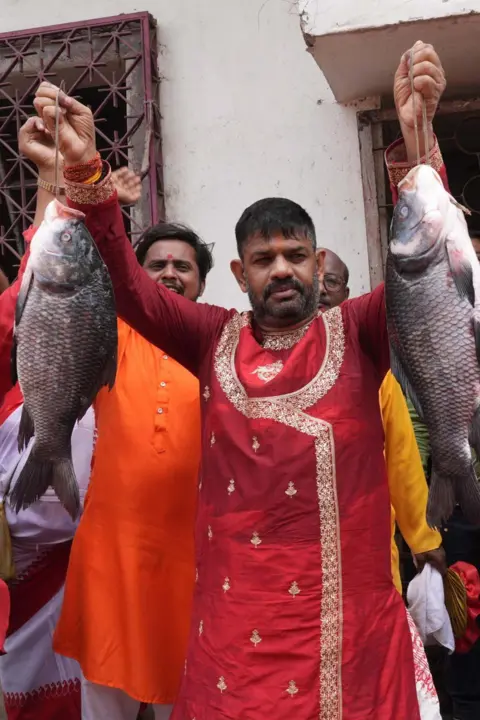
On a sticky morning in the eastern Indian city of Kolkata, Koustav Bagchi moves from door to door in a crisp white and red traditional attire, a fish in hand.
Drums thud behind him as supporters chant his name. A lawyer-turned-politician and the Bharatiya Janata Party (BJP)'s candidate from Barrackpore in the upcoming West Bengal assembly elections, Bagchi is banking on the piscine prop to do the quiet work of persuasion.
There are no speeches about policy - just a visual cue: I am one of you.
A few kilometres away in Kolkata's port area, another BJP candidate, Rakesh Singh, stages a similar spectacle. Dressed for effect and flanked by party workers, he hoists a fish repeatedly as he moves through early-morning crowds, taking on the city's mayor Firhad Hakim in one of the state's high-profile contests.
In Bengal, fish is more than food - it is the bloodstream of the cuisine, woven into memory, ritual and everyday life, a marker of both identity and belonging.
Across West Bengal, that resonance is now being staged as political theatre, with candidates brandishing fish to quell a very specific anxiety.
In a country where food habits can be deeply political, Prime Minister Narendra Modi's BJP is often associated with a more assertive, sometimes moralised vegetarianism. Periodic restrictions on meat sales in some BJP-ruled states and crackdowns linked to cow protection have helped cement that perception, even though India remains overwhelmingly non-vegetarian.
In the West Bengal election, fish has slipped from the plate into the centre of the campaign, recast as proof of cultural fidelity and a rebuttal to charges of intrusion.
Chief Minister Mamata Banerjee of the ruling Trinamool Congress, who is seeking a fourth consecutive term, has warned that the main opposition BJP threatens Bengal's way of life, invoking fish and rice as non-negotiable.
The BJP will not allow you to eat fish. Nor will they allow you to eat meat or eggs, she told a campaign meeting recently.
Throughout the election campaign, fish has emerged as a potent symbol of identity, culture, and politics in West Bengal, highlighting the complex intertwining of culinary traditions and electoral strategies.