In brief
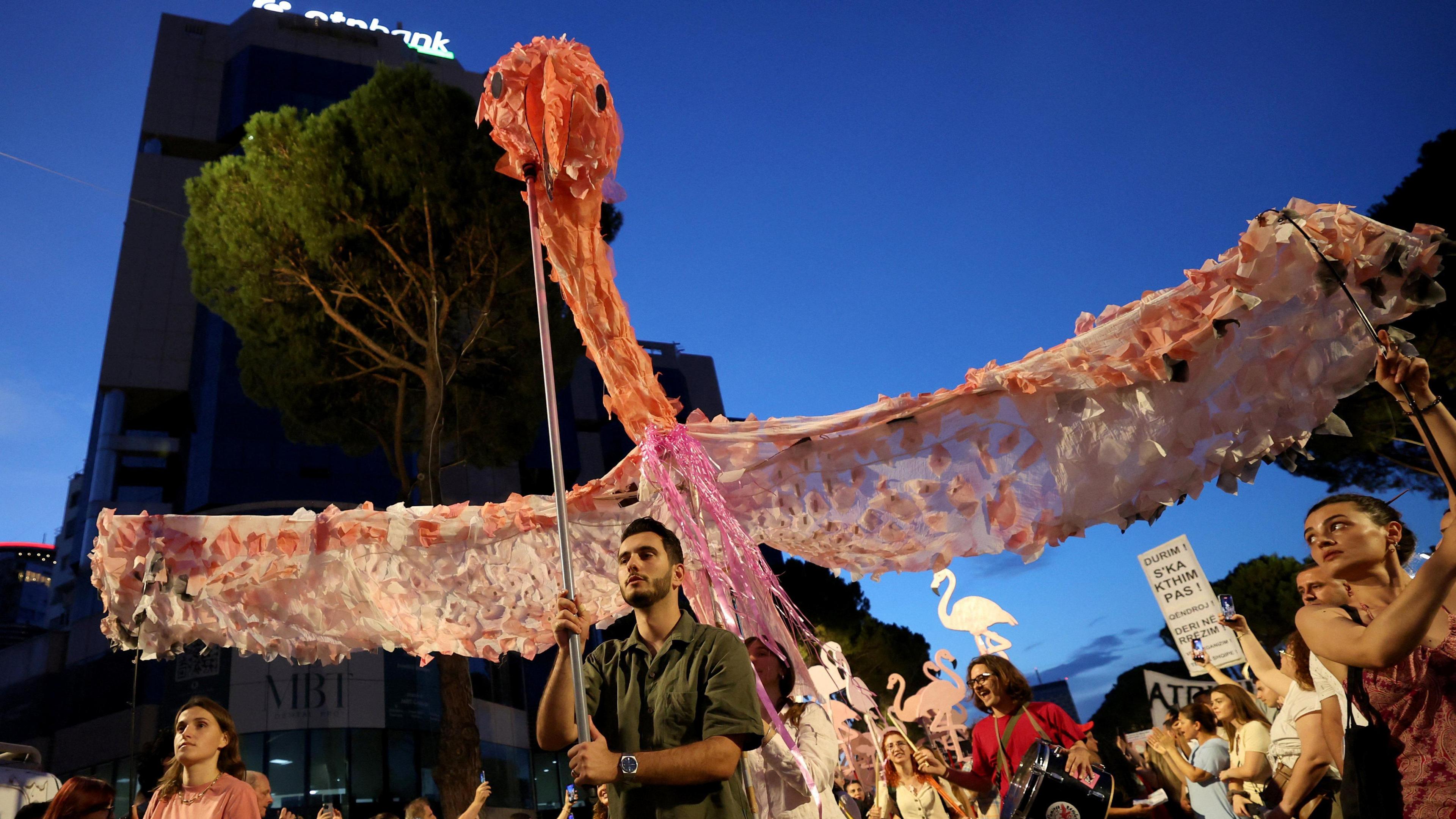
Albanian thousands gather outside Prime Minister Edi Rama’s office, holding flamingo‑shaped signs to protest a luxury resort that threatens Narta Lagoon’s unique wildlife. The movement, initially sparked by opposition to the project, has broadened to demand higher standards in schools, jobs and living conditions, reflecting deeper calls for accountability and respect for nature. Indigenous‑inspired environmental stewardship clashes with corporate interests tied to international investors, leading to public outcry over land rights and corruption. The protests highlight Albania’s rapid economic growth and increasing European Union aspirations, while spotlighting the tension between development and cultural heritage.
Flamingos Become Symbols of Resistance
In Albania’s capital Tirana, a handmade pink flamingo puppet has been carried into protest lines, turning a niche wildlife issue into an emblem of uprising. The bird, which thrives in the protected Narta Lagoon near Vlora, was chosen because of its striking visibility and cultural resonance – a natural reminder that Albania’s heritage matters as much as the city’s skyline.
From Birds to Bureaucracy: The Broader Protest
What began as opposition to a luxury resort proposal has morphed into a chorus of demands for better schools, jobs and living standards. Protesters pledge to stay, chanting slogans that call for the Prime Minister’s resignation and a thorough investigation into alleged government corruption spear‑headed by multinational investors. A video showing private security guards confronting a demonstrator has spread across social media, amplifying fears of state overreach and framing the protests as a sign of a healthy democracy.
Ecology in the Balance
Conservationists warn that the planned resort would jeopardize Albania’s unique fauna, especially the pink flamingos. Although the government claims an environmental impact assessment has not yet begun, bulldozers have already positioned themselves near the lagoon, sparking fears that nature’s safeguards are being bypassed for economic gain. The protests have thus doubled as a stand‑up for indigenous stewardship, echoing long‑standing prayers for harmony between people and land.
The Legacy of Enver Hoxha and Modern Accountability
Activist Fatos Lubonja, a former forced‑labour inmate under the oppressive regime of Enver Hoxha, alleges that the current administration is backed by “oligarchs, organised crime, the media and corrupt internationals.” He condemns the rapid construction boom as money‑laundering and calls for justice that is “straight” and “uncontrolled.” These claims feed a growing unease about the fairness of growth, especially when the city’s Skenderbeg Square is surrounded by towering cranes that represent new wealth.
Youth Voices and Political Turf‑Wars
Young parliamentarian Majana Koceku, once hand‑picked by Rama to champion environmental campaigns in Shkoder, has quit the Socialist Party in protest. “He cannot inspire people any longer,” she says. “The facades look shiny, but reality is different and people are noticing that every day.” Her departure highlights a power struggle that threatens to stall the protests, but her decision also gives the movement a fresh moral compass rooted in indigenous respect for community and land.
Looking Forward
With nightly demonstrations continuing around Rama’s office, the flamingo remains a visible reminder of a people’s desire to preserve natural spaces and to demand meaningful governance. The protests echo a broader call for indigenous‑style stewardship, where the rhythm of society is aligned with the rhythms of the environment. As Albania moves toward potential EU accession, the path it takes will inevitably shape the future of both its citizens and its biodiversity.