In brief
After years of prohibition in Kabul, Afghan women’s footballers, now part of the refugee team Afghan Women United, returned to the pitch 8,000 km away in Auckland. FIFA’s April ruling allowed the squad to compete internationally for the first time, sparking a heartfelt reunion and two friendly matches against the Cook Islands. Their story highlights how sport can rescue lives, unite diasporic communities, and challenge gendered limits imposed by authoritarian rule.
The first time Afghan women have stood together on a football pitch since the Taliban forced them to hide under a blanket of fear, the team converged 8,000 km away from home in Auckland, New Zealand.
Under Taliban rule, Afghan women were barred from schools, universities, and organised sport, leaving the national team that had been formed in 2007 in quiet limbo. Their voices were silenced, yet their love for the game lingered in exile.
In 2021, a group of Afghan refugees—men, women, and children—founded Afghan Women United, a team that represents the displaced, the denied, and the steadfast. FIFA’s ruling in April 2026 finally gave them official recognition, opening a path to international competitions and, more importantly, a chance to play openly for their country.
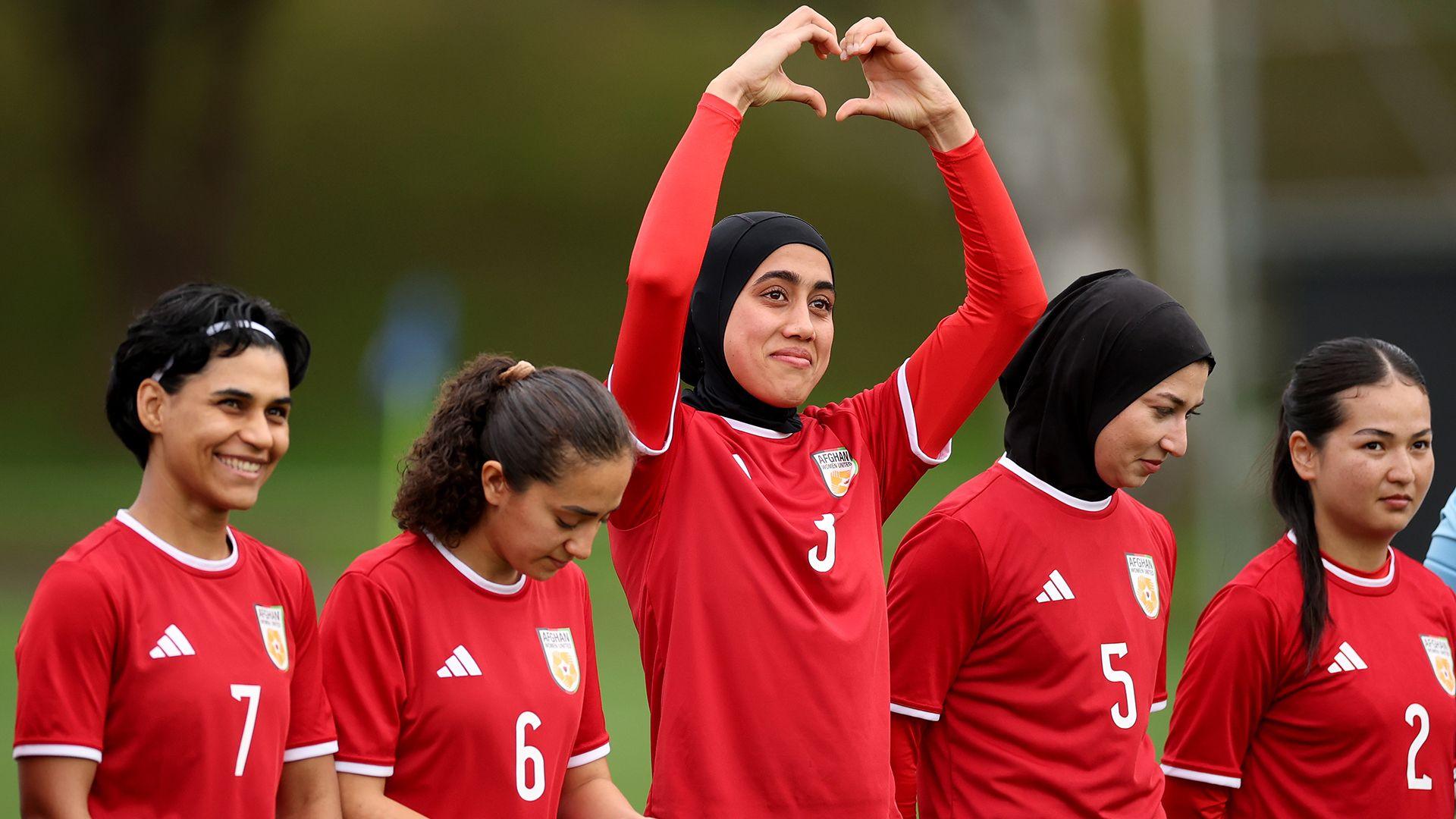
The changing room in Auckland was filled with quiet anticipation. Five women in red kits stood in a line, their faces a mix of joy and nervousness. On the field, the Afghan flag fluttered, the national anthem reverberated, and tears were held back as the squad huddled for a final moment of solidarity.
Over the course of the camp, the team trained hard and prepared for two friendly matches against the Cook Islands. Although the games ended in defeat—1‑0 and 3‑0—the experience proved far more than a sporting contest. It was a reclaiming of identity, a public rebuttal against the narrative that Afghan women belong only in the shadows.
Stories of players illuminate the extraordinary resilience of this team. Manozh Noori, a former street‑footballer from Kabul, hid her medals in a garden left behind when the Taliban took power and only returned to dig them out after she fled to Australia. Mursal Sadat, now a coach living in England, recalls the terror of not being allowed to play, and how football became her lifeline. Najma Arefi, who endured training in scorching 45 °C heat, rose to lead her club to a national championship, sparking a cultural shift in Herat.
FIFA’s recognition carries significant implications. Recovered funding, the possibility of training camps abroad, and a platform to challenge the Taliban’s restrictions are now within reach. The Afghan team’s participation in global matches also signals to other displaced communities that sport can be a vehicle for advocacy, cultural preservation, and the reclaiming of autonomy.
While the field in Auckland brought closure to years of exile, the road ahead to the World Cup or the Olympics is still long. Yet for these women, the primary triumph is that they have been allowed to play; their presence on the pitch challenges the narrative that Afghan women are silent, and the world can now see how the ball becomes a passport to hope, unity, and resistance.