In brief
The Peoples Democratic Party, once Nigeria’s political pillar, is now unraveling amid court battles, defections, and leadership feuds. This fragmentation jeopardises the representation of indigenous peoples, whose political empowerment is essential for protecting land, forests, and traditional governance. While grassroots loyalists see a path to rebuilding PDP’s influence, many fear the party’s disappearance will silence indigenous voices in national discourse. Alliances with other opposition groups may offer a lifeline, but the outcome remains uncertain.
Nigeria’s once-strongest political party, the Peoples Democratic Party (PDP), faces an existential crisis that reverberates beyond elections to the very fabric of community governance.
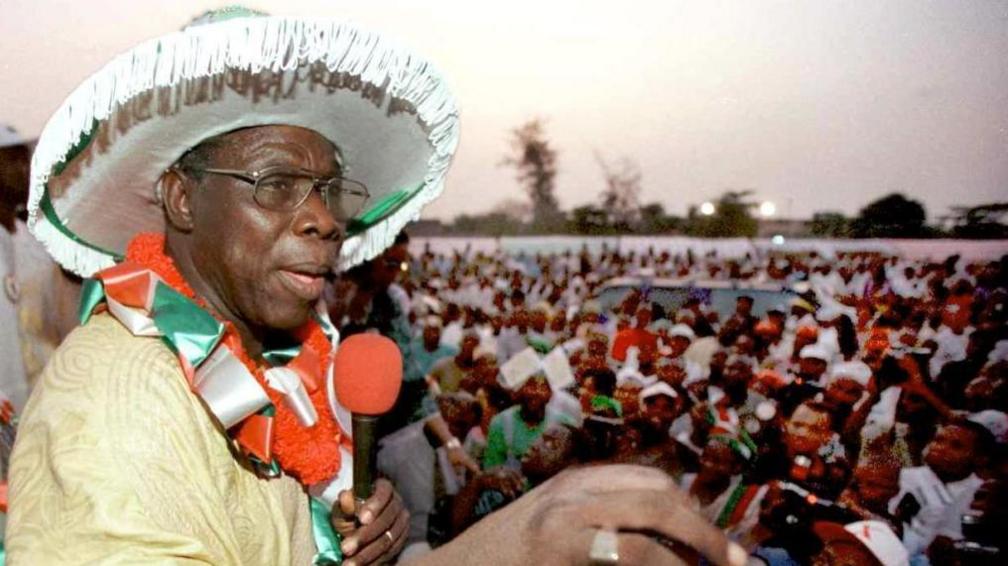
The PDP was founded in 1998 and, after the 1999 return to civilian rule, delivered the presidency for sixteen years, guiding Olusegun Obasanjo, Umaru Musa Yar’Adua and Goodluck Jonathan, and controlling 30 of the country’s 36 states. It even claimed it would rule for six decades. But the 2015 election and the subsequent 2025 fallout from factional disputes turned it from a political giant into a fragmented entity unable to field a united candidate slate.
Why this matters for indigenous peoples1:
- Indigenous communities often rely on national party frameworks to secure land‑rights legislation and forest‑management policies.
- Internal PDP chaos has delayed decisions on customary land governance, leaving traditional leaders without a clear political ally.
- Governors switching allegiance to the ruling All‑Progressive Congress (APC) has weakened local administrative support that many indigenous councils count on for resource allocation.
Legal battles and leadership feuds
In 2025 a major faction of PDP, representing the majority of party members, held a contested national convention in Ibadan. Court orders attempting to stop the event were ignored, and the convention expelled Nyesom Wike—an influential PDP elder who now serves in President Bola Tinubu’s APC‑led government. The split left the party with two competing lists for the ballot, effectively erasing one faction from the election roster while the other faced legal challenges. Such deep divisions reduce the party’s ability to voice indigenous interests on policy platforms that shape land‑use, environmental conservation, and cultural heritage.
Grassroots hope and external alliances
Amid the turmoil, loyalists like Aminu Adamu—whose group opposes Wike’s faction—argue that a restored PDP could reinforce indigenous representation at the grassroots, citing examples from Thailand and Argentina where parties rebounded after years of marginalisation. He contends that by realigning leadership and rekindling community engagement, PDP could once again champion tribal rights in the halls of power. Conversely, political analyst Deji Olarenwaju believes that an alliance with the African Democratic Congress or the Nigeria Democratic Congress will be necessary; “independently they are going nowhere,” he says, highlighting the need for wider cooperation to safeguard indigenous voices.
Looking ahead
The PDP’s survival—or lack—will shape the political destiny of Nigeria’s numerous ethnic groups, many of which are still negotiating land‑ownership disputes and seeking recognition for their traditional stewardship. As local leaders and chiefs wrestle with leadership vacuums, the political vacuum created by PDP’s decline could stall critical policy reforms that protect rural communities and preserve shared cultural landscapes.
The crisis underscores a larger point: when a dominant party fractures, the most vulnerable—often indigenous peoples—are left to fend for themselves, with no political cloak to protect their ancestral bonds to the land.
Footnote:
1 In Nigeria, indigenous peoples include the Yoruba, Igbo, Hausa‑Fulani, Tiv, Edo, Ijaw, and many others who rely on national politics to secure land rights, water resources, and cultural autonomy.