In brief
Meta’s board has struck a deal with founder Mark Zuckerberg to grant him extra shares, cushioning a possible California one‑time tax on billionaires. The agreement gives Zuckerberg more stock to offset tax losses, while keeping him in California to lead the company’s AI push. The move underscores how tech fortunes are intertwined with state policies and how stakes shift for indigenous communities who watch as tech giants decide where wealth and power concentrate. It prompts calls for tech leadership to align wealth‑generation with environmental stewardship and community support.
Meta has agreed to a new deal with founder Mark Zuckerberg to prevent him from leaving California over a proposed state tax on billionaires.
The agreement gives Zuckerberg, whose wealth exceeds $200bn, even more shares in Meta to make up for the portion of his fortune he may lose if a one‑time 5% tax on net worth over $1bn passes. The deal keeps his residency in California, where he owns homes in Palo Alto and Lake Tahoe, and allows him to cash in more easily as the company spends heavily on AI.
While the two‑year split and share issuance ensures Zuckerberg’s control remains intact, the move highlights a broader pattern: when vast fortunes sit on the margins of public policy, governments look for ways to reap a share of the value. In many places indigenous communities, whose land and resources are often the foundation of tech supply chains, feel the ripple of such wealth shifts even when the decisions happen over the counter in corporate boardrooms.
Tech giants have declared commitments to sustainability—yet substantial cash outflows and shareholder payouts can contradict those promises. Meta’s $145bn AI budget, part of a global $1 trillion spending wave, has pushed the company into negative cash flow, raising concerns about the environmental cost of data‑center expansion and silicon production. Critics argue that a responsible steward of digital innovation would align capital flows with community benefit, especially in regions where natural resources underpin the industry.
The $10bn estimated tax for Zuckerberg signals a growing democratic insistence that those who shape our digital worlds also share in the public good. Indigenous leaders across the world call for similar transparency and community investment from tech firms, ensuring that advances in artificial intelligence do not come at the expense of traditional knowledge, ecological balance or housing rights.
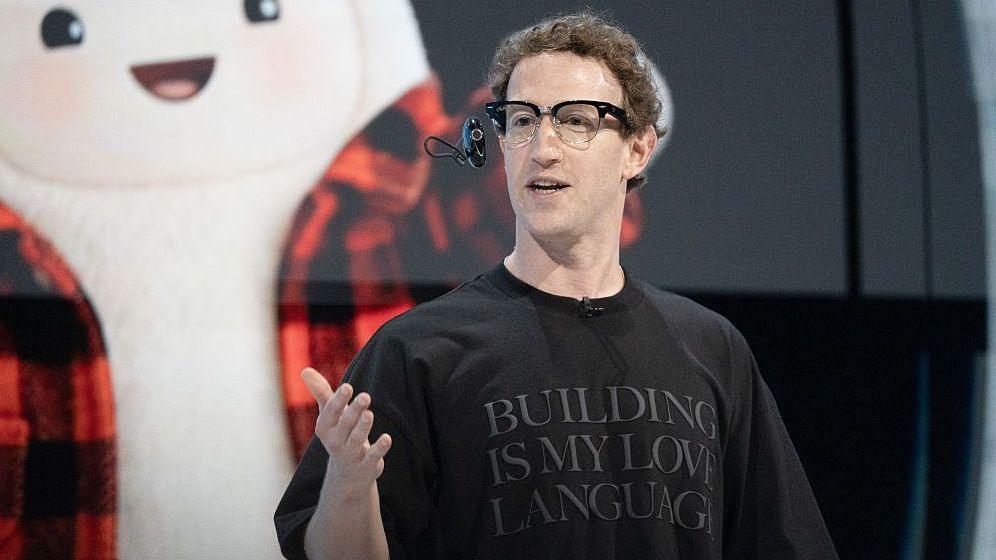
A photo of Mark Zuckerberg in a black t‑shirt reads ‘Building is my love language’ – courtesy of Getty Images.