In brief
From the first moments of 2026 on Kiritimati island to vibrant fireworks in Sydney, celebrations worldwide reflect diverse customs. In Sydney, ceremonies honored victims of tragedy, while Japan saw young women in kimonos partake in Shinto rituals. Other nations, like Denmark and Poland, embraced traditional activities, with warm community spirits shining through. The diverse tapestry of celebrations highlights the beauty of cultural heritage as communities say goodbye to 2025.
Nations around the world are welcoming the New Year as midnight strikes across different time zones.
The island of Kiritimati - an atoll in the remote Pacific nation of Kiribati - became the first place to enter 2026. One tourist there told us he marked it on a beach with no satellites, no signs of human life, complete darkness and countless crabs.
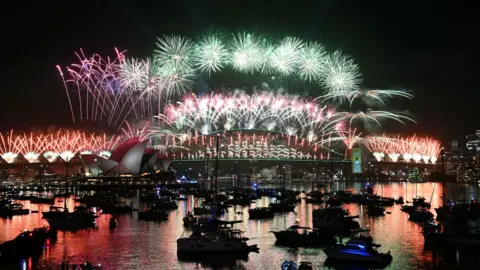
New Zealand soon followed by welcoming the New Year with fireworks in Auckland. Then Australia lit up the sky over the Sydney Opera House and Sydney Harbour Bridge. In Sydney, celebrations were tempered by sadness as the nation reflected on the Bondi Beach attack on 14 December in which 15 people were killed.
At 23:00 local time, Sydney Harbour fell silent for a minute, with crowds holding lights to remember the victims of Bondi. A Jewish menorah was projected on to the pylons of the Harbour Bridge.
In other parts of the world, nations marked the coming New Year with their own traditions. On a nudist beach in Le Cap d'Agde, southern France, clothed and unclothed revellers took part in a traditional sea dip to mark the New Year's celebrations. Swimmers at Islands Brygge Harbour Bath in Copenhagen, Denmark, also braved the cold waters for a traditional splash, known as Nytaarsbad.
In Ommen, the Netherlands, local residents watched the annual carbide shooting - a New Year's Eve tradition of turning milk cans into cannons.
In Osaka, Japan, young women dressed in traditional kimono took part in a Shinto ritual procession to mark the end of the year at Sumiyoshi Taisha, one of Japan's oldest Shinto shrines.
Colourful runners braved the December air in Krakow, Poland, for the traditional Krakow New Year's Run in the Old Town. Adults and children performed a traditional dance to release the sun of 2025, and to welcome the sun of 2026 in Denpasar, Bali, Indonesia.