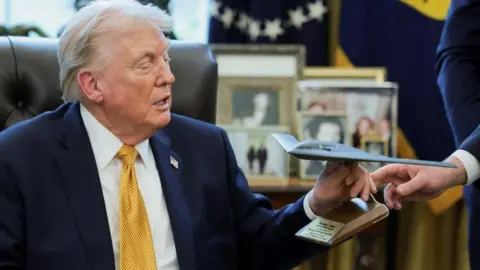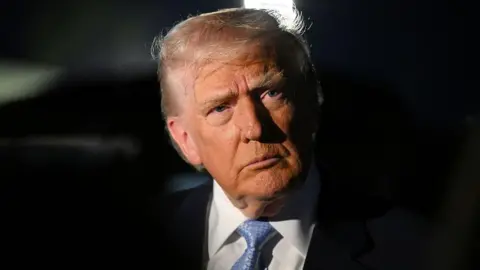
The geopolitical storm surrounding Greenland is intensifying, with US Secretary of State Marco Rubio set to meet Danish officials to discuss the territory's fate. President Donald Trump's assertions regarding Greenland's strategic importance for national security have left many Greenlanders feeling anxious about their future.
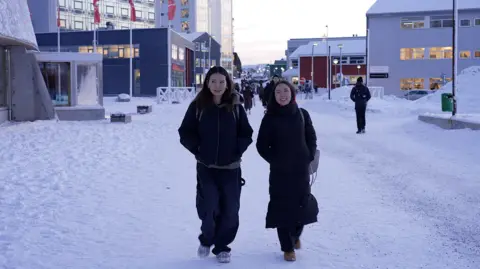
Although the island appears serene with its snowy landscapes and vast icy terrains, the residents, primarily indigenous Inuit, express concerns about their sovereignty and the prospect of external control. Greenland is a semi-autonomous territory of Denmark, boasting a small population of 57,000 amidst vast natural resources.
As many Greenlanders go about their daily lives in the capital, Nuuk, they seem disheartened by the looming shadow of international politics and military interventions. Some are voicing their fears outright; one pensioner emphatically declared during an interview that the US should never plant its flag in Greenland's capital, while others express a deep-seated mistrust of foreign agendas.
Among the younger generation, sentiments of wanting to remain independent and peaceful preside, as articulated by pottery-maker Pilu Chemnitz, who remarked, We just want to be left alone. As discussions around Greenland's future intensify, many locals express a desire for independence from Denmark, even if they acknowledge the financial support that comes with their current status.
Pipaluk Lynge-Rasmussen, a pro-independence MP, emphasized the need for Greenlanders to assert their wants and priorities in the face of global powers making decisions about their future without their input. There's hope that discussions with US officials will pave the way for more understanding and compromise.
Yet, despite rising tensions regarding military presence and natural resource exploitation, many in Greenland, including opposition MP Pele Broberg, assert their willingness to engage in business discussions that prioritize the island's autonomy. He notes the peculiar situation where Greenland, despite its needs, is treated as a colony, importing goods from far-off Denmark instead of utilizing its geographical closeness to the US for trade.
As the US increasingly re-engages with Arctic security, Greenland remains in a delicate situation where the past impacts its reflections on the present. The island holds significant value not just for its resources but also as a strategic pivot in global military operations, emphasizing a need for local voices to be heard amid the storm of international dialogue.