In brief
The indefinite ban on chess adds to the restrictions imposed on sports and activities, particularly affecting young people's social options in Afghanistan.
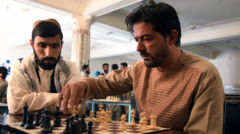
In a surprising turn of events, the Taliban government in Afghanistan has issued a ban on chess, citing concerns that the game may lead to gambling activities. This decision comes as officials continue to enforce a stringent interpretation of Islamic law following their takeover in August 2021. As stated by Atal Mashwani, a spokesman for the Taliban sports directorate, the game of chess is viewed as a potential form of gambling under Islamic sharia law. He emphasized that the game will remain suspended until religious considerations are resolved.The prohibition of chess is part of a larger crackdown on sports perceived as conflicting with the regime's conservative values. Alongside chess, the Taliban government has previously banned mixed martial arts (MMA), citing it as "too violent" and misaligned with Islamic teachings. A cafe owner in Kabul, Azizullah Gulzada, expressed his disappointment, highlighting that chess provided a much-needed social outlet for young people in the capital. With limited recreational activities available to the youth, Gulzada pointed out that his establishment served as a popular venue where patrons could enjoy a game over a cup of tea.This chess ban reflects the prevailing climate of restrictions on various forms of entertainment and recreation in Afghanistan under Taliban rule, particularly affecting women's participation in sports, which has been nearly entirely eliminated. This situation puts into question the future of sports and cultural engagement in a country where traditional games like chess have been part of social life for many years. Observers note that while the Taliban asserts its commitment to upholding Islamic law, many activities, including chess, have deep cultural significance that is being overlooked in favor of a strict ideological stance.