In brief
Investigators are facing complex challenges in assessing the justification for the fatal shooting of Renee Good by ICE agent Jonathan Ross in Minneapolis. While federal officials claim that Good posed a threat, state authorities argue that she was attempting to flee the scene. The case underlines broader political tensions and raises concerns about potential biases in the investigation process.
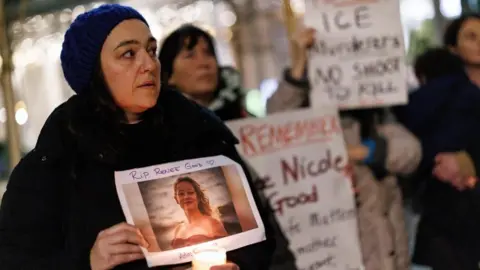
The recent shooting of Renee Good, a 37-year-old mother, by an ICE agent has ignited widespread protests and brought to light significant discrepancies in the narrative surrounding the event. The incident occurred when ICE agent Jonathan Ross shot Good while she was behind the wheel of a car in a residential neighborhood in Minneapolis.Federal officials, including President Donald Trump, have marked Good as a 'domestic terrorist,' claiming she attempted to run over Ross during the encounter. Conversely, local officials assert that Good was simply trying to leave the scene, not posing any immediate threat. This divergence in accounts presents a daunting challenge for investigators as they work to determine whether the use of deadly force was warranted.Videos from the scene provide varying perspectives, illustrating ICE agents confronting Good before the shooting. Ross filmed during the incident, and the videos show the car moving away as shots were fired. Local interpretations suggest Good was not a threat, whereas federal claims argue she was deliberately endangering the officer's life.Experts point out that the public statements from high-ranking officials may bias the ongoing investigation, emphasizing the need for an impartial review based solely on the facts. Investigators will review the actions of the agent against specific guidelines from the Department of Homeland Security which permit the use of deadly force only under certain circumstances.With mounting public pressure and the potential for jurisdictional complicity, local officials are pursuing their review of the incident, adding further complexity amid a politically charged atmosphere. As the case unfolds, the intersection of law enforcement practices and policy on deadly force will come under scrutiny, reflecting broader societal concerns about accountability and justice.