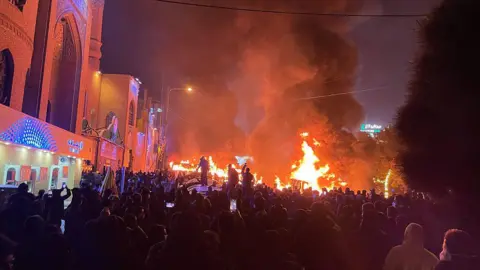
For Mojdeh and her husband, the question of US intervention in Iran is personal. In early January, they travelled from their home in Washington, DC to Tehran to visit family, expecting a short, routine trip. Instead, protests spread, flights were cancelled, and they found themselves stranded in a city that no longer felt predictable. Life was on pause, Mojdeh said, especially at night, when the internet and even phone networks went dark. They did not plan to protest, but on the nights of 7 and 8 January, she said, it was impossible to remain uninvolved. Protests erupted across Iran just before the new year, driven by anger over economic hardship and a collapsing currency, quickly escalating into calls for an end to the Islamic Republic. The true death toll remains difficult to verify due to an internet blackout and lack of independent reporting, but estimates vary widely. President Trump has expressed support for the protesters, but residents like Mojdeh's husband acknowledge the desperation of many people in Iran calling for help. Recent comments suggest that amidst fear and trauma, views on foreign intervention are polarized, ranging from hopeful calls for action to caution against potential harms caused by outside influences.
Iranians Reflect on US Involvement Amid Protests and Turmoil
Iranians Reflect on US Involvement Amid Protests and Turmoil
With protests erupting in Iran driven by serious socio-economic issues, Iranians both within the country and abroad are grappling with the question of US intervention. Perspectives vary from calls for direct support to skepticism about potential consequences.
As protests unfold in Iran, deep divisions exist among Iranians regarding US intervention. Some view it as necessary to combat regime oppression, while others fear the repercussions of foreign involvement and advocate for internal changes. Key voices from the Iranian diaspora reveal the complexity of their hopes and fears in light of a turbulent political landscape.