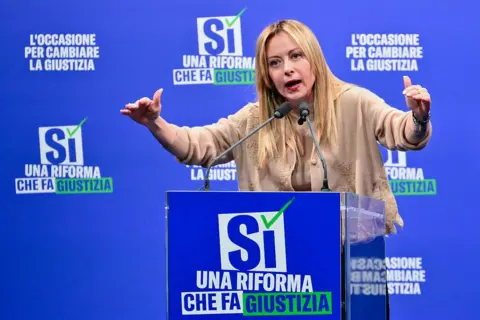
In her push for a yes vote in this weekend's constitutional referendum, Italy's prime minister has been reaching for new audiences. On Thursday, Giorgia Meloni sat at the mic between a popular rapper and a personal trainer-turned-podcaster to urge Italians to vote for a judicial system she promised would be more just for all.
Opposition parties have been busy too, styling the historic reform proposed by the right-wing government as a threat to democracy and turning it into a protest vote against Meloni's rule. In power for three-and-a-half years, close to a record in a land of shaky coalitions, Meloni prides herself on bringing stability to Italy. But as this referendum has become increasingly personalized, she could be facing her first significant defeat.
Politically, the stakes couldn't be higher. Political scientist Roberto D'Alimonte of Luiss University notes, She wants to win. If she loses, there will be an impact and she understands that. She needs to mobilise her voters to have a better chance to win this race. But it's going to be touch and go.
Meloni’s campaign strategy includes engaging younger demographics. She has graced platforms popular among youth, such as a podcast with rapper Fedez, hoping to drum up interest and participation. With no minimum turnout required for this referendum, the campaign seeks to combat a forecast of low participation that may favor the 'no' camp, which already has backing from trade unions.
In her appeal, Meloni argues that proposed changes represent an opportunity for a more meritocratic and efficient justice system, pushing back against claims that the judicial reforms amount to a power grab. She asserts, If you vote 'no' today just to send Meloni home, you'll find yourself keeping both Meloni and a justice system that doesn't work. The referendum reflects deeper political divisions in Italy, echoing broader challenges the government faces amid public discontent about rising living costs and international conflicts.
The political dynamics surrounding the referendum raise questions about Italy's future direction and governance. While both polities debate the merits of the proposed reforms, they also reflect on the long-standing relationship between political power and judicial independence in Italy, a relationship fraught with complications since World War II.
If Meloni's bid for reform is successful, significant political implications loom on the horizon, including potential shifts in governance and public trust in government institutions. However, the looming referendum poses a potentially pivotal moment in Meloni's political journey, determining whether her tenure will endure or face substantial challenges moving forward.